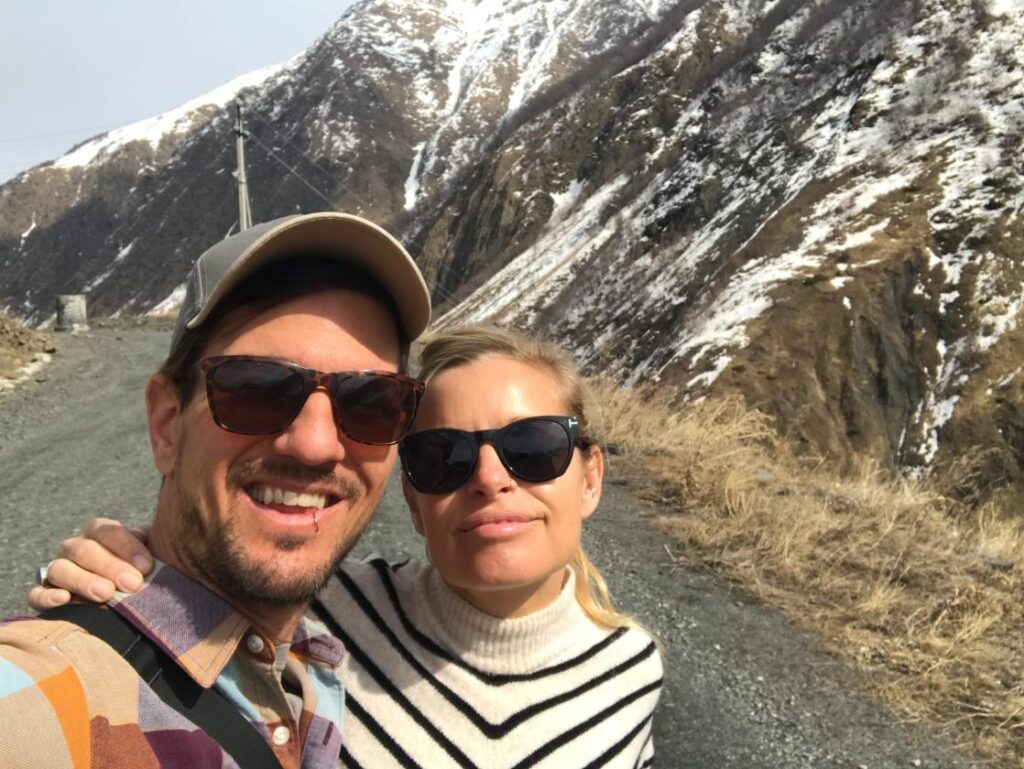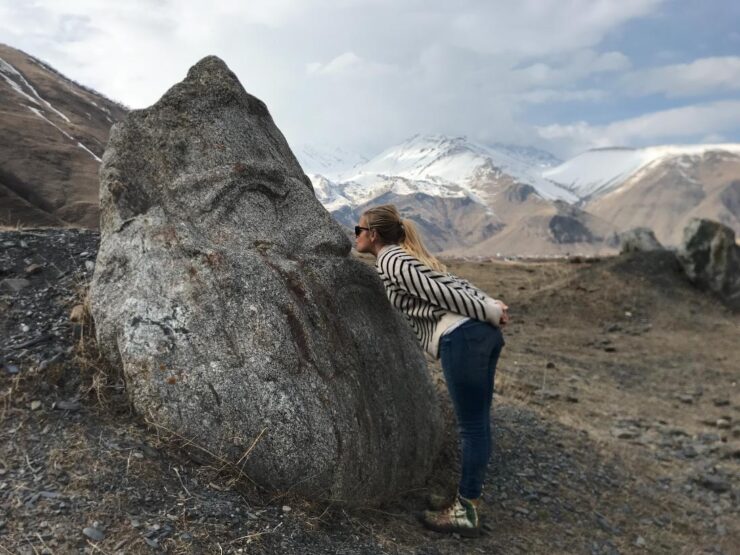
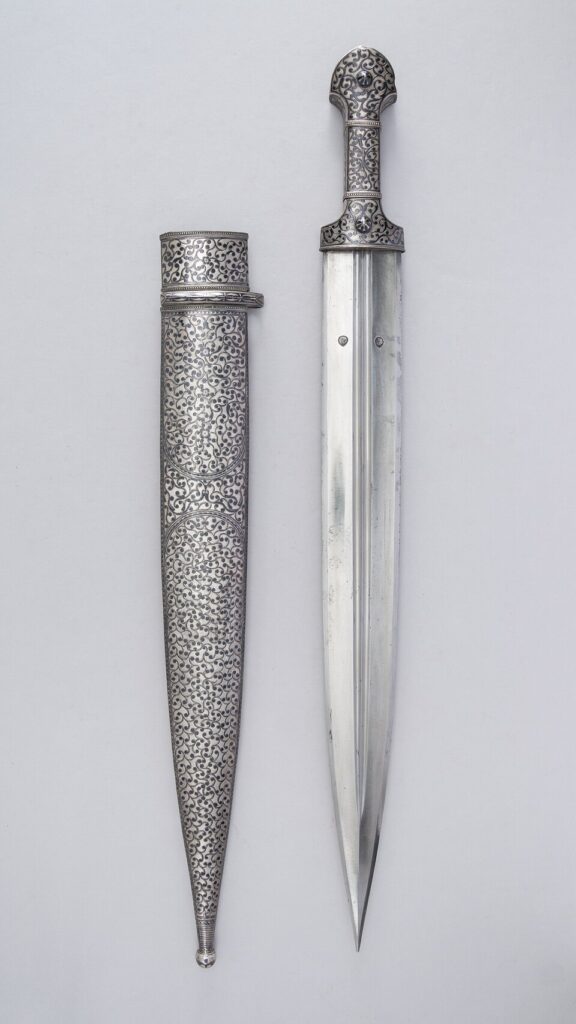
I would have only thought of Georgia as a deep-south state of America had my father not come to this Caucus nation nearly thirty years ago to help design a school for disadvantaged youth. He brought me back the gift of a bejeweled dagger and sheath–called a Khanjali which is common in the Caucasus region–and I remember spinning in wonderment at what this other Georgia must be like if everyone walks around holstering glittering knives…naturally, I was keen for a chance to see for myself.
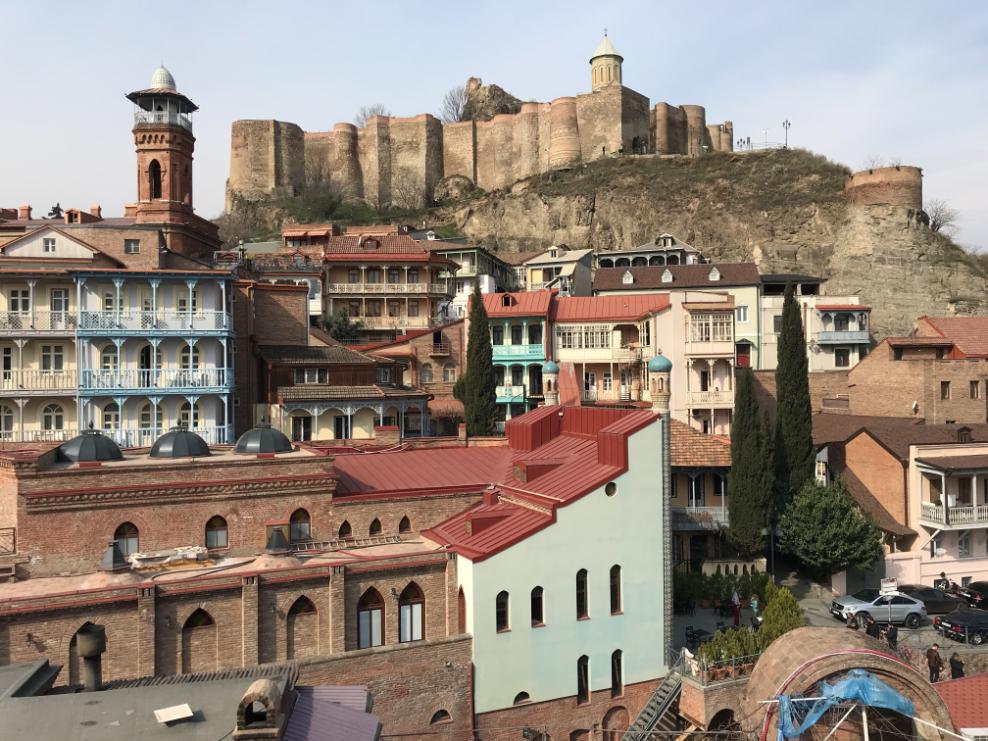
Lucky for me, ‘Georgia the country’ (as I have to specify for my US friends) is just across the border from Turkey, and red-eye flights can be had for cheap even when booked the night before travel. With the window rapidly closing for our chance to visit, Clare and I make a rash decision and soon find ourselves hunting for accommodation on our phones while waiting for a bus to take us to the airport. We land in Tbilisi near four in the morning, and by the time the cab drops us off at the hotel we’re grateful we booked a room for ‘last’ night and can crawl immediately into bed.
Okay, let’s admit it–we both love a shabby-chic locale. There’s something about the soft crumbling of decrepit buildings that pairs well with fresh furniture and snappy wifi. You feel like you’re somewhere with a story to tell and yet the hot water still works when the tale is finished. Apparently we’re not the only ones who appreciate this aesthetic as some 10 million visitors a year come to soak up the vibes of Georgia’s capital city.
Massive medieval cathedrals, all hewn stone and wrought iron, abound at every corner. There’s a decaying fortress perched atop the ridgeline overlooking town that is accessible in minutes by a high-speed gondola. A rambling milieu of brick and timber buildings perch on the hillside in various states of disrepair clinging to their foundations at desperate angles. Throughout the streets you find heaped loaves of artisan bread, or wander down a set of rusted steps into the womb of burgeoning microbrewery.


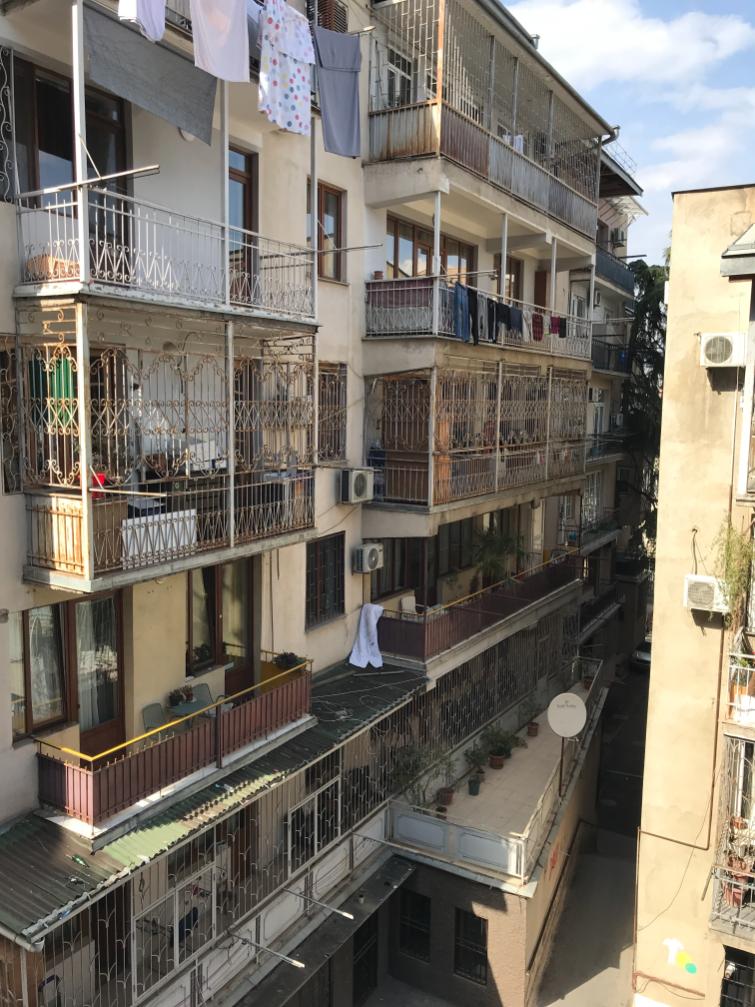
Still, some of the buildings look on the verge of collapse. “Do people actually live in these houses?” I ask our Bolt driver as he weaves us home through traffic, and point to a building with a second floor overhang that is bending its way separate from the rest of the house. Massive cracks in the walls actually give view to the wallpaper inside.
“Of course. Why would not people live there?” His surprise at my question is so genuine that I’m content to let the matter settle in silence, as if a simple misunderstanding.
Pipes and wire and drains dangle from precarious holds like industrial nests, stacks of bricks cracked with eroded mortar, layers of paint peel from tired wooden joints like the bark of ancient trees. Roots push open the cobblestone streets and burst cracks in the concrete, blistered walls heave and drip, smeared with moss, dusted with webs. Doors ajar in their jambs, off kilter and unable to close. Rusted corrugated roof patches, dilapidated balcony cantilevers, sprawling vines fill cracks everywhere. Once elegant facades are now crumbling like a cookie between the fingers of a three year old, and yet somehow it’s all so charming and whimsical…when you don’t have to call it your home in the dead of winter.


That night (still our first in the country) we’re invited to a friends’ housewarming party. He meets us on the street before leading us through a side door and up the stairs of a grim communist style apartment block, using the flashlight on his phone to guide our way up four flights of stairs.
“There is an elevator,” he explains, “and it’s free to take down, but you need the right change in order to go up…and I always seem to be lacking.” A pay-per-ride elevator, Clare and I pause in astonishment, guess there still is a first for everything.
We get up to his floor, and he reaches for a switch. “Luckily, our floor just paid the electricity so now the lights are working,” Mattha grins with pretend pride. Two naked bulbs stutter awake and cast dreary illumination on half-painted walls, mismatched doors, and raw concrete floors. It looks like the Soviets left in the early 90s and not much has happened since.
Inside, however, is a different story. Exotic floral wallpaper covers the largest wall of the living room, right up to the high ceilings. Crisp tiles line the floors and bathrooms, the house is decorated with mismatched but functioning secondhand furniture, as befits the home of students abroad. Kimea is an Irian national studying dentistry in Georgia via the English language. Mattha is a French entrepreneur who, with his brother, runs a blue-light filtering eyewear company over his laptop from a variety of exotic locations. Georgian immigration is generous to foreigners, and digital nomads use the country’s year-long visa to great advantage, or so we assume from the standing room only at cafes all over town crowded with tattooed hipsters hunched over glowing keyboards. Anyway, the two met a year ago, got serious, and have just signed a lease on their first apartment.
“I just can’t seem to get away from Georgia,” Matt feigns distress.
“I think you just like having ‘going-away’ parties,” his friend Victor retorts, and everyone laughs.
Mattha took Kimea to France last Christmas to meet his family, and Kim was able to keep-up with the French-only conversation after just two-weeks of study on Duolingo. She explains this to me after I bag out the language app, saying I did it everyday for six weeks and I can still barely answer ‘how are you?’ in Turkish. “It’s just in one ear and out the other,” I lament, but obviously that’s because I’m lacking something functional in between. I butcher Turkish names so badly that a Turkish friend advises me between fits of roiling laughter, “Please, it’s better you do like Clare, just don’t say anything at all.”
At any rate, our small party christens the new home with fresh pizza, 2-liter plastic bottles of beer, and a wide variety of wine. The bottle of red I brought sits open but unsampled on the table, and assuming that I chose poorly, I dare to inquire the largely French audience more about the intricacies of wine.
“We start with white wines,” Robert (pronounced ‘Robear’ of course) speaks for the group, “and then gradually work through to the lighter reds and only finish on the deep fruity ones, such as you brought.” He takes a calculated sip of leggy white from a jar in his hand before continuing, “Otherwise, if you start with heavy wine then you won’t be able to appreciate the others.” How have I never been taught this before? Or are my heavy metal American taste buds just too desensitized to enjoy anything other than a big bold Nappy red?
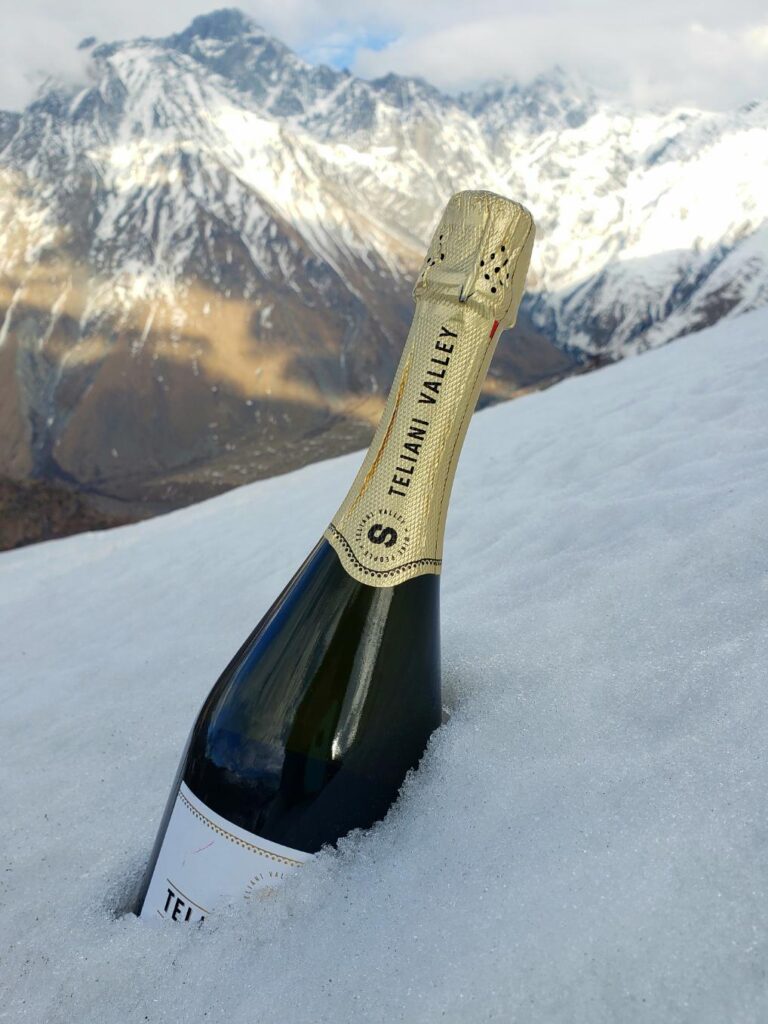
Regardless of how you drink it, it turns out that the earliest evidence of wine production anywhere in the world is found in Georgia. As far as archeological records are concerned, Georgians invented wine and to this day the country is renowned for its high quality and variety of both red and white wines. Clare is embarrassed to bring a bottle of $7 sparkling white, but finds it surprisingly delightful…nor is she the only one, as the bottle doesn’t last long.
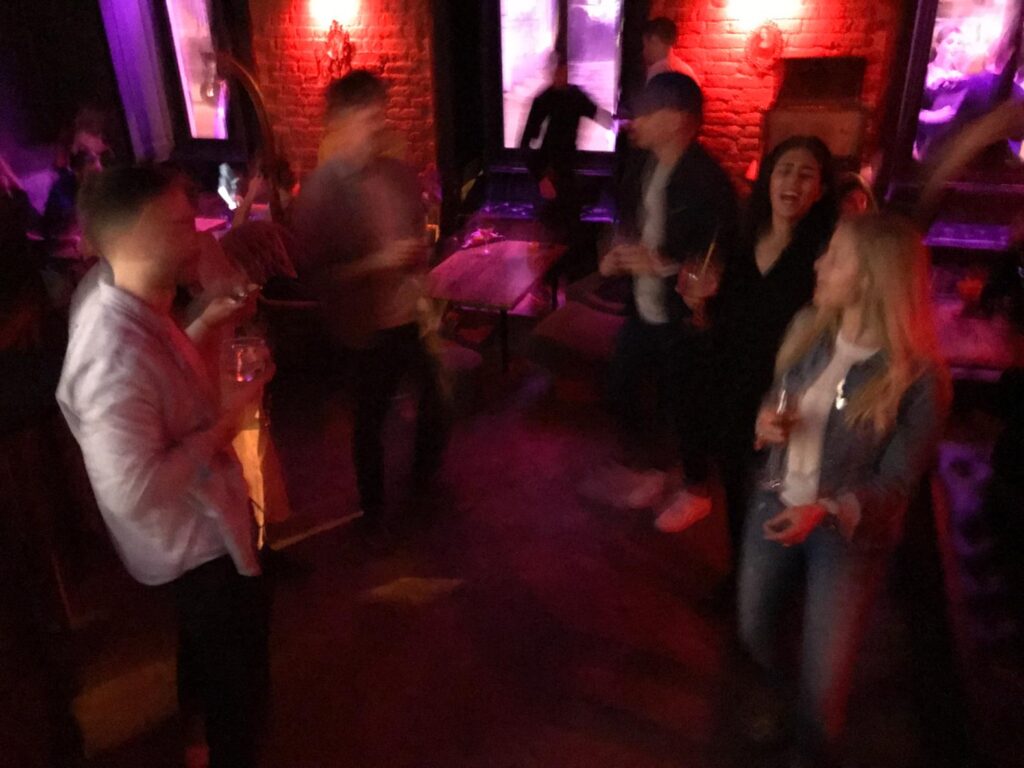
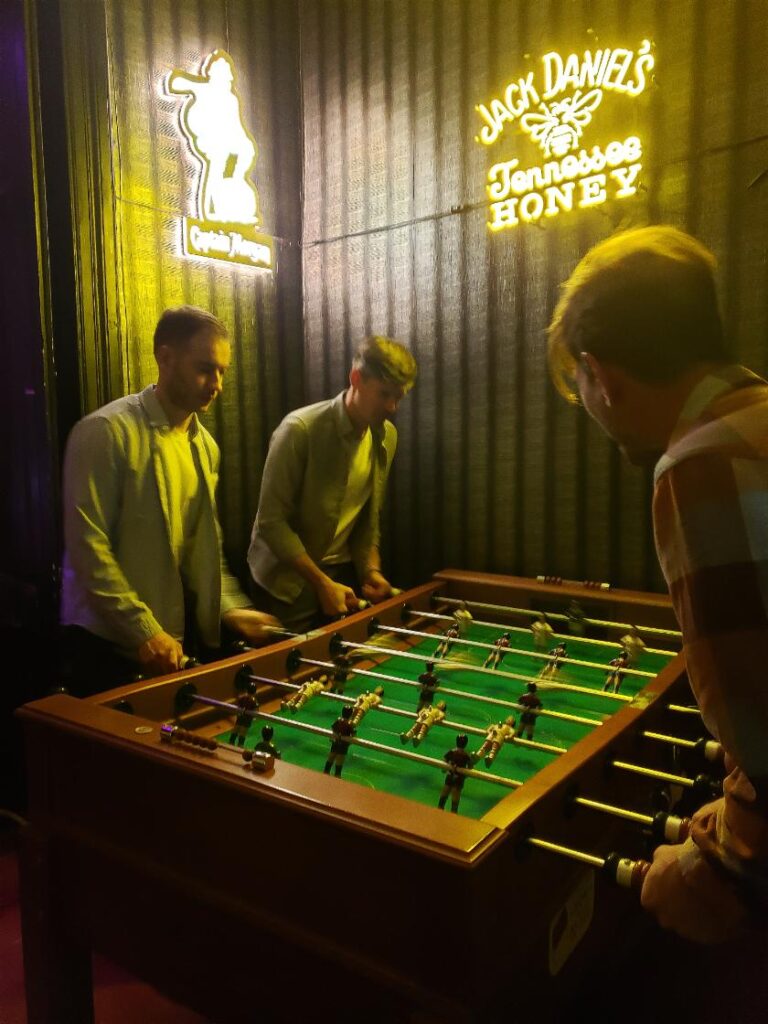
With a good head start toward intoxication, we catch a taxi into town. Tuga is nuts for foosball, so we visit her favorite bar featuring a table and proceed to have an informal tournament. Mind you, I already stuck my foot in my mouth by celebrating Argentina’s World Cup win this past December in a room full of Frenchmen, and they have no trouble making me pay double for my faux pas. Thoroughly trounced, I buy a conciliatory round of drinks and we move back to the bar. We take turns keeping the jukebox pumping throwback favorites that have us grooving till midnight–marking the official beginning of Clare’s birthday and requisite birthday kisses from the group–and the fun doesn’t stop until Clare and I finally stumble home in the wee hours.
Later that morning I scrape myself out of bed and get to our hotel’s breakfast buffet just before closing to assemble a tray of food, including two freshly made omelets. I even recruit the help of a delightful staff member, who delivers a waffle birthday ‘cake’ complete with a candle. We enjoy the quintessential breakfast in bed, then Clare opens the handful of gifts she smuggled in her luggage from Turkey and responds to well-wishers around the globe.


Eventually we catapult ourselves to a buzzing restaurant across the street and proceed to gorge a generous plate of khinkali, Georgia’s national dish of steamed dumplings. In our attempt to walk off the meal we wind up lost in some dark and decrepit neighborhood that is a bit too shabby, and not enough chic, but we manage to extricate ourselves and make our 10pm appointment to conclude the birthday extravaganza with a scrub and soak. Tbilisi earned its name, ‘a place of warmth,’ after early residents discovered a natural spring of hot sulfur water, and people have been coming to bathe ever since…even if does leave us smelling like rotten eggs. Lucky for us, our hotel is directly next door so even in our heat-dazed state it isn’t much effort to get back to bed.
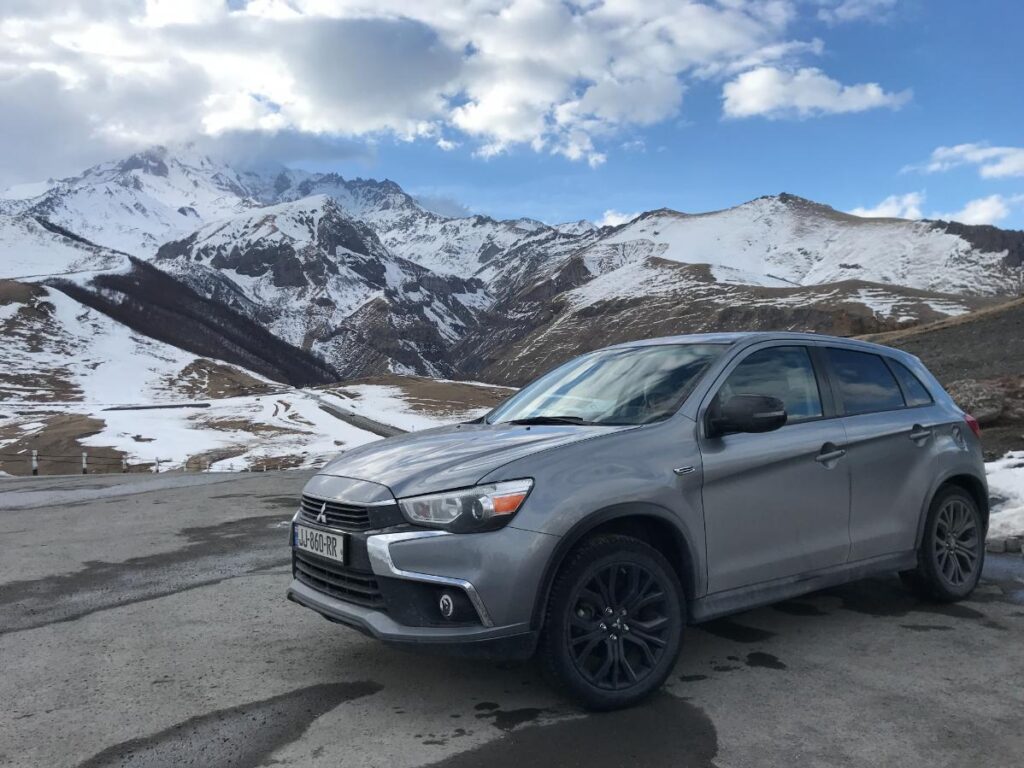
As charming as the capital city is, I’m determined we see a bit of the countryside, especially some of the dramatic vistas from the Great Caucasus range of mountains. So we hire a 4×4 and head off on the renowned Georgian-Russian military highway. Apparently, for thousands of years this route provided the only pathway through the domineering Caucasus mountains, and so it remains today. Although the road is ‘paved’ and certain stretches even boast guardrails, the USSR construction is dated, well used, and in the middle of a very harsh environment. The highway is often closed due to inclement weather, and even in relatively benign conditions, such as we have, there are many tunnels and hairpin bottlenecks along the way that require coordinating the incessant two-way traffic.
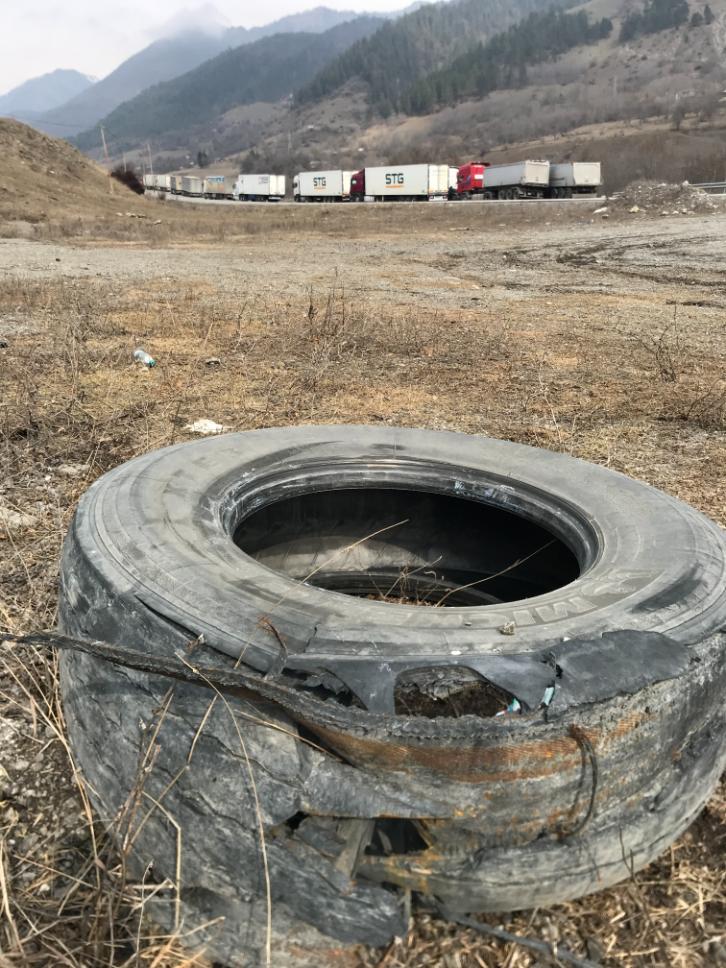
We’re surprised to be passing lines of trucks waiting on the side of the road, sometimes for ten kilometers or more. “Some of those trucks are better stocked than supermarkets” a friend informs us later when we ask how they survive. They are well adapted to the road closures, and can wait for days or even weeks if necessary. “At least they have company,” Clare remarks at a group of men lounging in makeshift chairs over a kettle of tea, laughing into the sun. Another, with a handful of tools, is tinkering on an ancient Russian-built diesel engine, his friends cluster around the opened bonnet, no doubt giving ‘imperative’ advice while lazily dragging on hand rolled cigarettes. For better or worse, we never see a single woman.


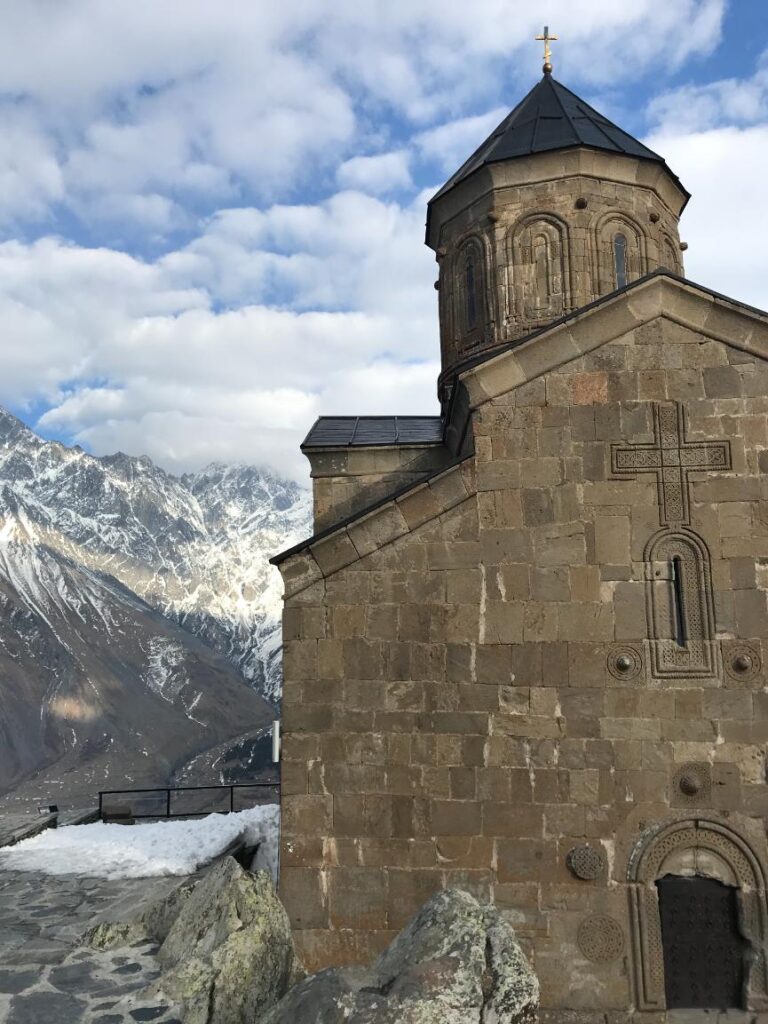
About halfway through the drive we come to the freshly snow-coated base of Gudauri ski resort. Chairlifts stretch, like tentacles, up into the white oblivion and I feel a rumble of longing from my Alaskan roots. I’m still recovering from double surgery (knee and shoulder) and am therefore in no state to enjoy the alpine activities, but we do stop to have dumpling soup and sit outside in the glowing whiteness to just soak it all in. Soon after lunch we are over the pass and into the next valley which twists and winds its way deep into the range, passing small villages and ancient ruins along the way. With the last hour of daylight we wind our way up to the iconic Gergeti Trinity Church, which for a brief time requires the use of our 4WD. The church affords a panoramic view of the surrounding Kazbegi mountains, the jagged peaks sawing the sky into ribbons of melting orange sherbet.
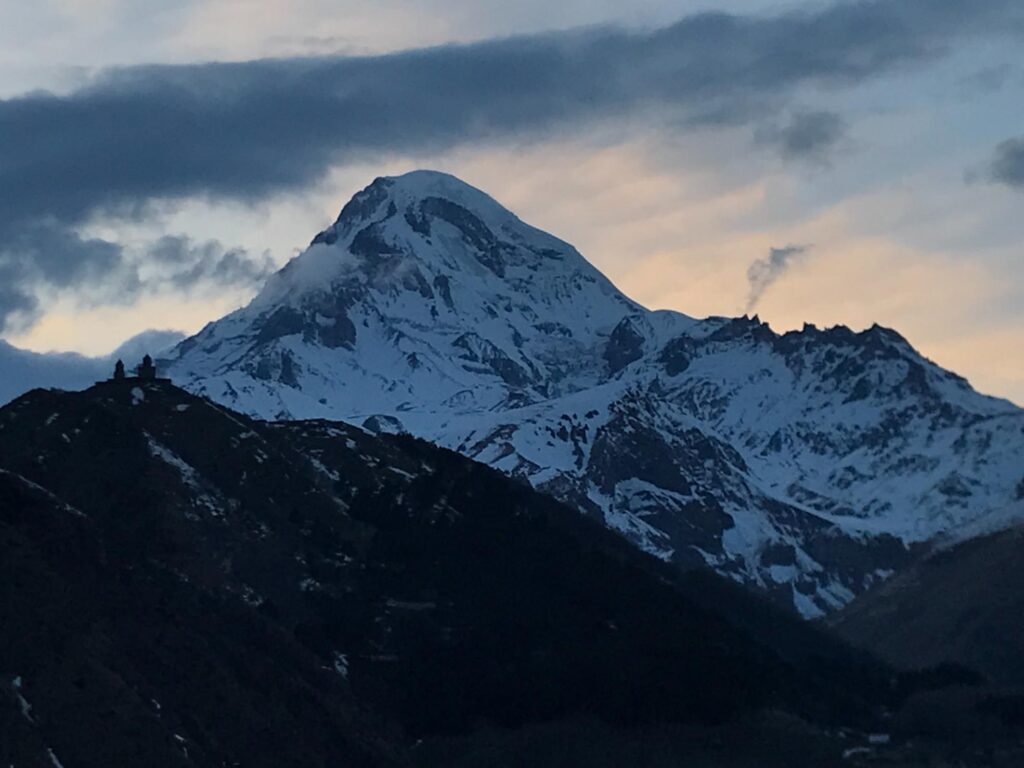
With unbridled enthusiasm and creative hand gestures we’re able to communicate with the Georgian owners of our hotel–who are far more versed in Russian than English–and check-in. We watch the last of the sun set behind the 5000-meter Mount Kazbek while sipping happy hour from the toasty confines of the hotel lounge. After dinner, a visiting family offers us leftover pieces of a celebratory cake and samples of their home-distilled cognac. “Გაუმარჯოს,” the dad says before touching his shot glass to mine. “Gaumarjos” I return his ‘cheers’ as best I can, inevitably butchering yet another foreign language.
We wake the next morning with the stated mission of visiting the nearby Dariali Monastery Complex, but really we just want to see how close we can get our GPS dot to Russia. It doesn’t take long to cover the ten or so kilometers to the border, but we get squeamish near the checkpoint and turn off the road before being asked to show our passports. Surprisingly, there is a sizable supermarket (a wall of vodka bottles cloud the entrance window), a fully-functioning mechanic shop, and a plethora of tiny shacks with currency symbols on their windows and spray-painted signs that simply read SIM. For many Russians, this is the first view outside of their Putin-dominated boundaries…at least it’s beautiful.
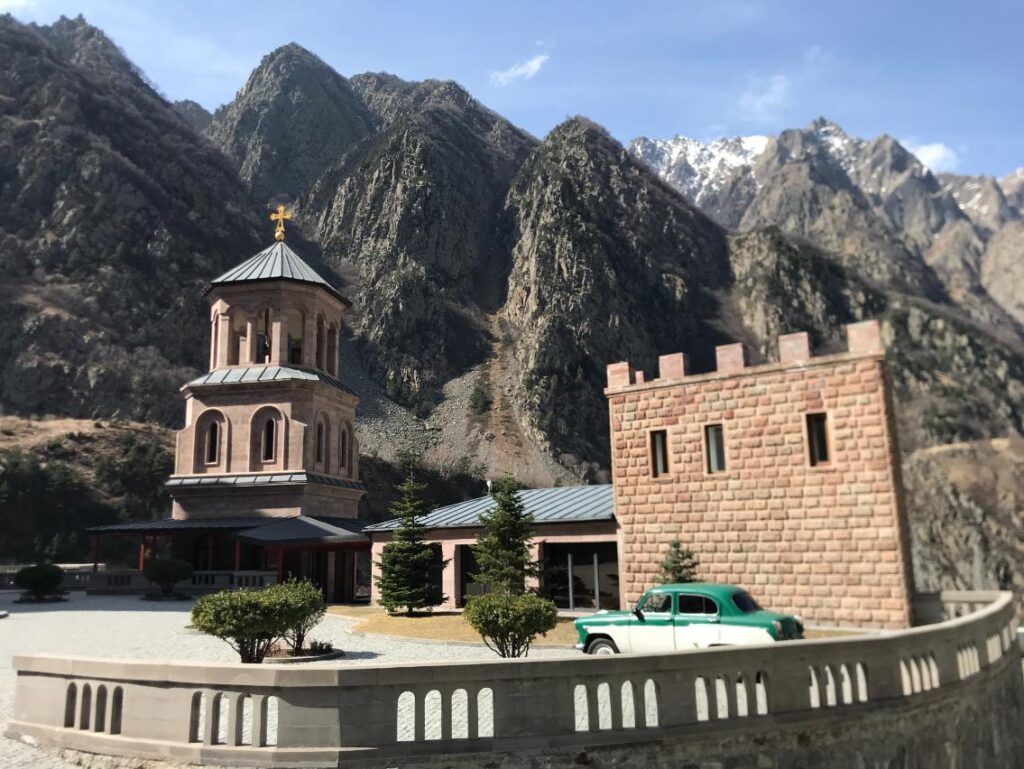
Conifer forests creep up the steep slopes of shark-toothed mountain peaks topped with snow. Rivulets of melt drain down rocky ravines, and glisten in the undulating sunshine, which momentarily bursts forth from behind rolling cloud cover. The first birds of spring lazily practice aerial maneuvers in preparation of the upcoming summer bounty. The air is as fresh and crisp as the most cliched mountain-adorned detergent bottles claim. It’s like watching one of those HD TVs, where everything is a bit too crisp and contrasted, and looks fake because it appears so real.
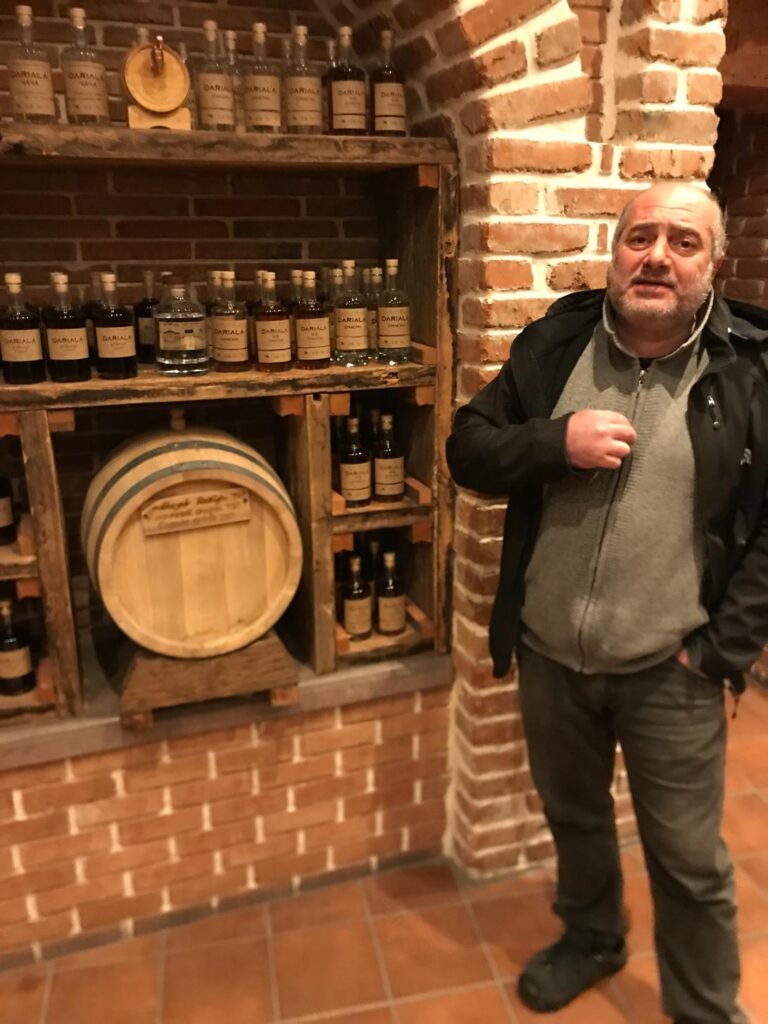
“Do you want to see the wine cellar?” our monastery guide, Chagik, asks just as we think our pleasantly informal tour is over. “Uh sure, why not.” We reply with a bit of hesitation, expecting to find a dusty basement stuffed with unlabeled bottles of indiscriminate vintage, and subjected to a long-winded speech about the subtle intricacies of local varieties with unpronounceable names, but hey, we’ve already seen Russia. “Just a moment,” our guide implores after leading us through a stately door of wood and cast iron. A moment later he finds the light-switch and our disgraceful expectations are obliterated. Clean, carefully laid brick extends in all directions. Warm wooden shelves house neatly stacked pyramids of color-coded bottles.
There’s even a display area, showcasing labeled bottles and a cask for samples. We are dumbfounded at the level of order and precision, but come to learn that this is how the brothers mostly sustain themselves. He leads us into another room where wooden-handled disks are arranged along the floor. “This is where they make the extra-dry wine,” Chagik explains, “where it’s left in traditional amphora to age for a year or more…though there’s nothing brewing at the moment.” He lifts one of the lids revealing the oblong emptiness of a narrow yet deep clay vessel, the exact shape of countless specimens we’ve seen in museums across the Med, the ubiquitous ‘shipping containers’ of the ancient world.


We spend the rest of the day driving around in the car, trying to get as deep as we can up various mountain valleys before being blocked by snow berms, snapping endless photos, happy to be soaking up the detergent fresh mountain air. Aside from the pristine glow of the remaining winter snow, the valleys and slopes are otherwise a drab blend of brown and gray. The shoots of spring are yet to arrive, and the sprawling forests are bud free. Furthermore, despite a variety of signs advertising food and beverage, it’s difficult to find anywhere actually serving, and it’s clear that we’re here out of season. We do find an open Panorama restaurant which lives up to its namesake, and we spend the dwindling afternoon hours augmenting our experience of Georgian food and beverage while enjoying the breaktaking views.
We’re a tad late returning to Tbilisi the next day, but the nice guy who rented us the car offers to drive us to the airport, ensuring we’ll make our afternoon flight. As we zig and zag our way through rush hour traffic, I become acutely aware of this last chance to talk politics, and start peppering Vadeem with haphazard questions. Gratefully, he obliges my interrogation and is refreshingly candid.


“We are in a very delicate position,” he explains, “as we have tensions on all sides. Russia is of course our biggest neighbor, and we share a long soviet history, and many of our people at one time or another lived in Russia. But then again, Moscow invaded our country in the 90s, and they currently occupy two areas that we as Georgians can no longer travel to. So we have a close yet troubled history with the big bear.
“Armenia is to our south, and they remain strong allies with Russia, so all traffic between the two must pass through us…which can be good or bad, depending on who is in charge. Next to Armenia is Azerbaijan, but the two of them are not friends. They had a war some years ago, and Turkey supplied Azerbaijan–also a Turkic people–with weapons, but Russia refused to help Armenia because the contested area is technically within Azerbaijani borders even though the population is completely Armenian…ironic, don’t you think, given the current [Ukrainian] war?
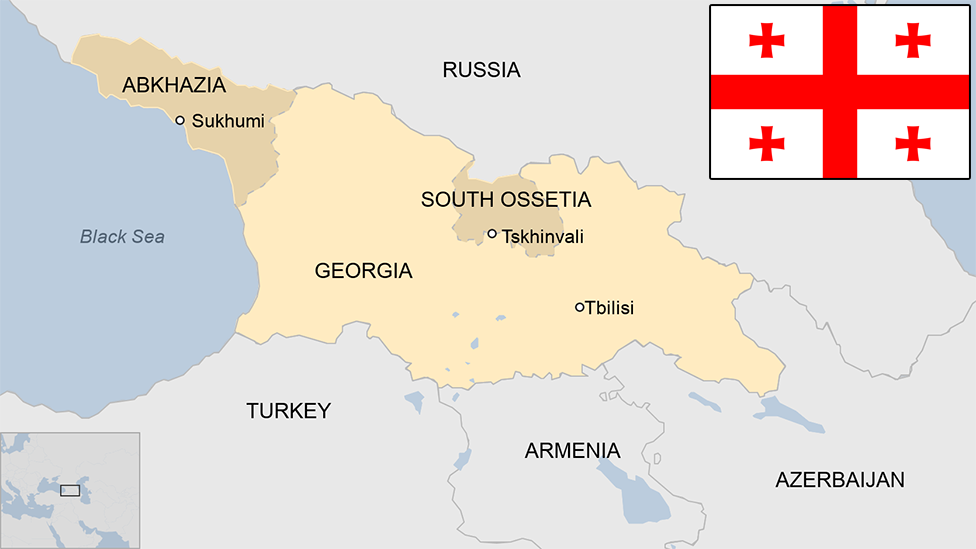
“At any rate, we Georgians are weary of Azerbaijan as they have a stronger military than ours and claim some of our territory. And like I said, they are supported by Turkey, our fourth and final neighbor, a country with a far bigger military that also claims historic rights to our land, mostly on the Black Sea…but we will never concede to them, or anyone.”
We’re on the highway now, speeding to the airport, our week-long foray into this crossroads nation rapidly drawing to a close, and our heads spinning with the complexities of geopolitics. We whizz by a massive billboard showcasing a graying man in a crisp suit, flashing a well-practiced smile. Vadeem anticipates my question, and offers his final analysis.
“That’s the newest president smiling down on us. Our politicians must walk a very tight rope. Most of them made their money in dealings with Russia, so they must appease Moscow, but then the Russian military invades Georgia and occupies several areas, so we have many reasons not to like them. The politicians try to distance themselves from Putin one day, and then embrace him the next, all the while trying to garner support from the West and trying to keep things cool with Turkey. So you see, we are a small nation with only 4 million people who speak an unusual language not related to any other, and yet somehow we find ourselves stuck between the competing interests of some of the world’s strongest powers… Meanwhile, we all have families to feed and lives to try and enjoy.”
Here’s to the ‘other’ Georgia, equal parts gritty and gorgeous, and you can watch our video here.