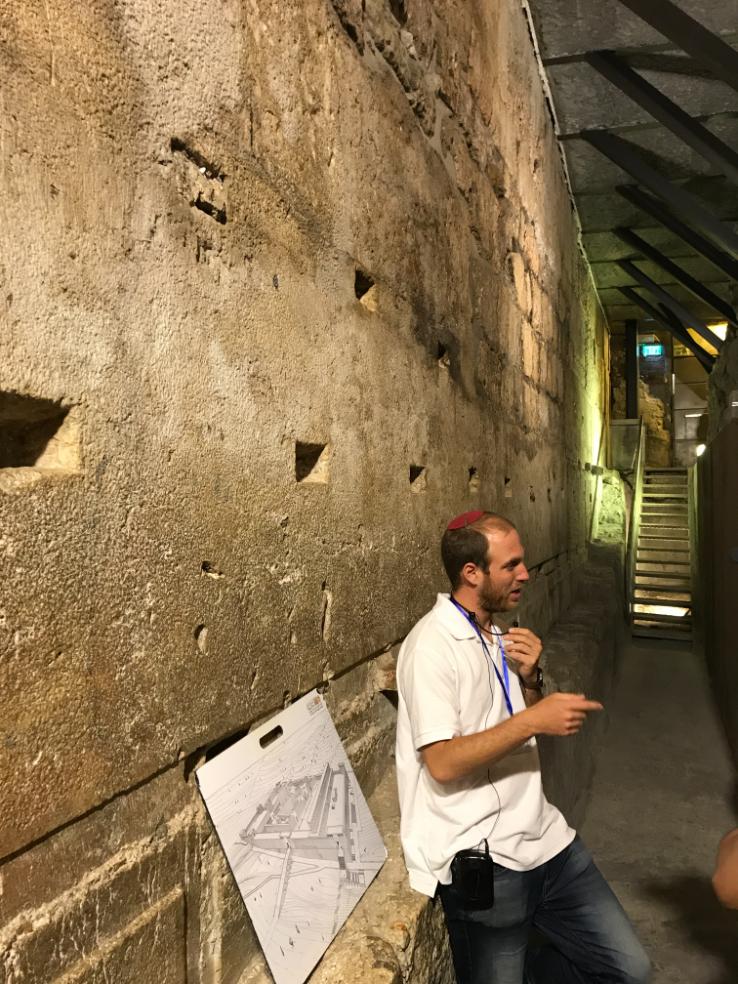
“Thanks for coming folks, and please be aware, we are providing armed escorts to ensure a safe return to the Western Wall,” our tour guide casually informs the group as we file our way up the stairs and to a streetside doorway. Despite our many years of overseas travel, this is an unprecedented offer from any tour group we’ve joined in the past.
Participants thank the guide before huddling around two sunglass-and-eyepiece-adorned TV-worthy undercover Israeli cops. Clare and I, the last people to exit the underground tunnels, are asked with some urgency, “Do you want protection on the way back?”
“Maybe from her,” I point to Clare and grin. The guide returns a tired smile as if he’s heard it all before, which he probably has. “No thanks,” Clare gives him a straight answer, “We’ll be okay.”
“Very well,” the guide bows his goodbye, gives a hand-signal to a woman with a stern ponytail who moves into position as the rear guard of the pack, and then closes himself behind a heavy windowless door, followed by a cacophony of scraping metal, the throw of steel bolts, and the weighty click of a substantial lock.
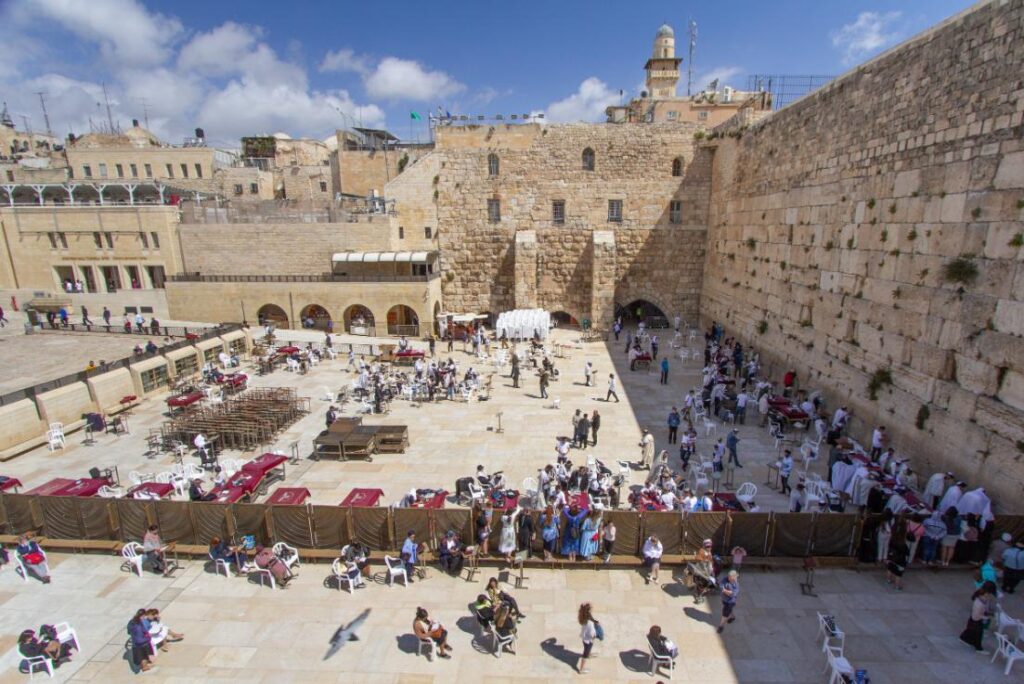
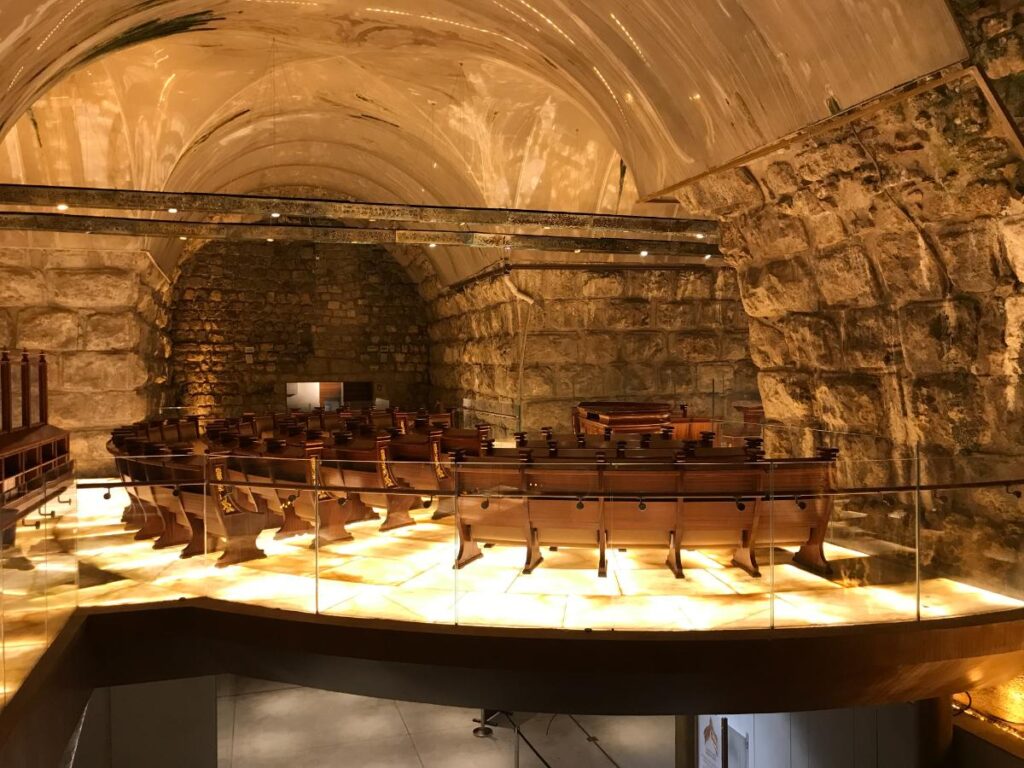
As we came to learn during our visit, old city Jerusalem is divided into four quarters–Muslim, Jewish, Armenian, and Christian–all of which have their own gates of entry. Although several streets are shared and it is not strictly forbidden to cross borders, by and large most people stick to their own areas and in general things seem peaceful enough–at least for us. But the tunnel tour we just completed began in the manicured and well-funded Jewish Quarter, quickly went underground, ran for a kilometer along the foundations of the Temple Mount and through a Roman-era cistern, and then deposited us into the commercial squalor of an open-air market within the Musilm Quarter. This means that participants (most of whom are Jewish) have unwittingly crossed quarters and may be feeling squeamish about getting back…hence the armed escorts.
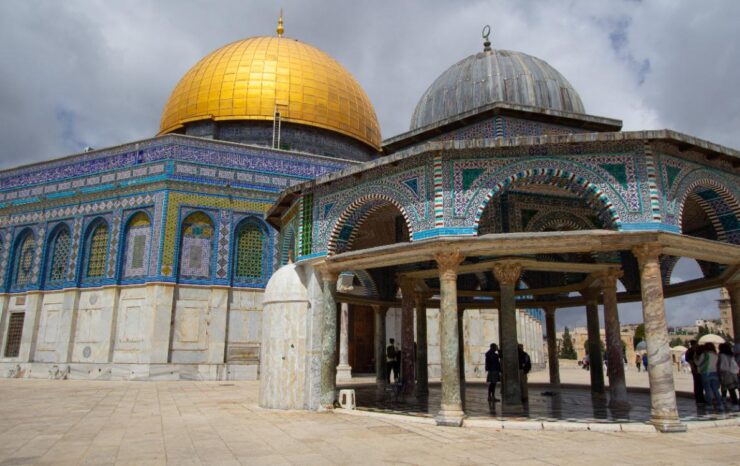
Although we haven’t been offered guards before, we do see plenty of guns during our ten-day tour of Israel. On our last day in the country, after a long wait in the morning sun, we finally manage to glimpse the breathtaking Dome of the Rock before being ushered from the site to make way for Muslim afternoon prayers. Like other non-Muslim foreigners, Jews are permitted to visit the iconic site during certain hours, but they are forbidden to pray there.
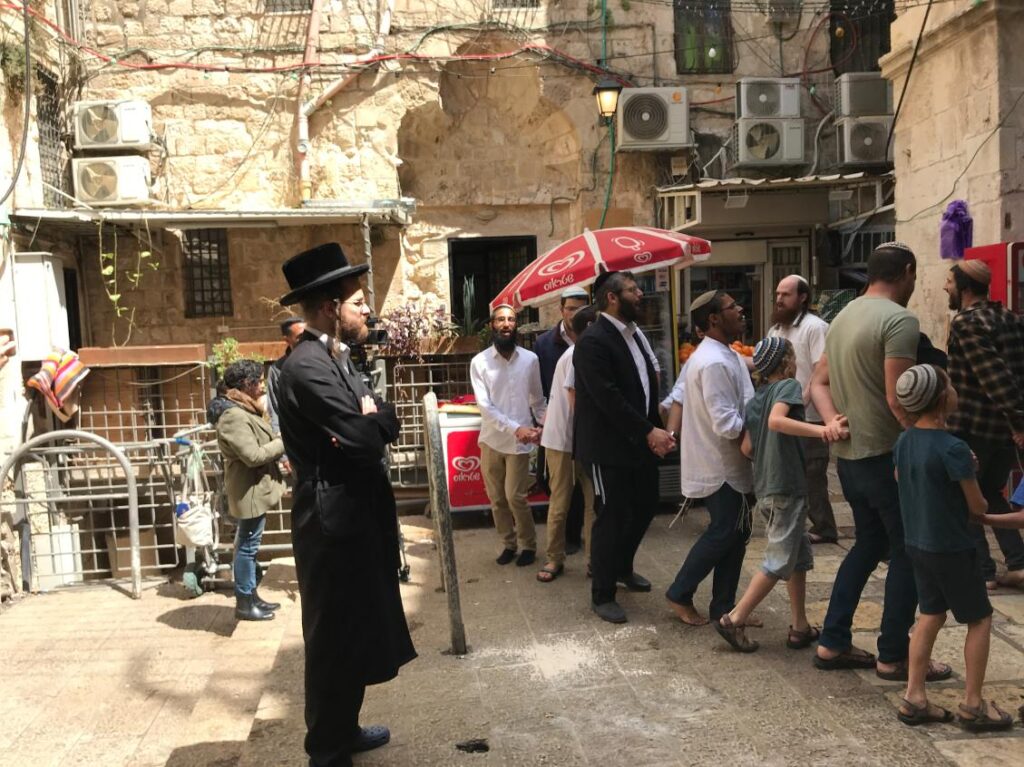
Instead, many gather just outside the mosque gate (still within the Muslim Quarter) and dance in a big circle while singing Jewish religious songs at the tops of their lungs. Within minutes the ecstatic congregation is protectively encircled by a contingent of heavily-militarized Israeli police officers, there to “keep the peace.” These zealous Jews may be less squeamish, but they benefit from armed escorts all the same, just not the undercover kind.
Although guns are commonplace in Alaska, where I was raised, they function more like jumper cables in the back of your car–a necessary tool readily at hand, but rarely used. Firearms provide a measure of safety against a natural environment full of potential threats (and food), not against the residents of your local neighborhood. But life–and the threats to it–in Israel and the territories it occupies are about as far removed from the frozen tundra, sprawling forests, and glacier-clad mountains of my home state as you can get.


No one even bats an eye at the sight of a half-dozen soldiers, machine guns slung over their shoulders, in line to order coffees, or playing on their phones while waiting for the city train. I can’t help but turn my head to watch a young female recruit in full fatigues, jackboots, and with blonde pigtails walking hand-in-hand down the sidewalk with her plainclothes bestie, the two of them giggling between ice cream cone licks, the solider with a hot-pink purse hanging from one shoulder and an automatic rifle from the other. Is this the sign of an enlightened military, or of a public too accustomed to violence? We even spot a pistol handle protruding from the pocket of an Orthodox Rabbi entering a synagogue. Guns are so pervasive that Clare and I challenge each other to see who can get the best photo of one in public…admittedly, neither of us is a very quick draw.
I don’t have the courage to ask any Israelis what they think of being constantly surrounded by the hardware of warfare, but undoubtedly their perspectives differ from those that the guns are aimed at…and we are fortunate enough to join a tour of Hebron, one of the biggest and busiest cities in the West Bank of Palestine, to see for ourselves. It is an eye-opening, harrowing, and informative experience, my account of which is too long to include in this email, so stay tuned for an upcoming report.
But besides guns, let’s talk about something else that Israelis have in spades…hummus!
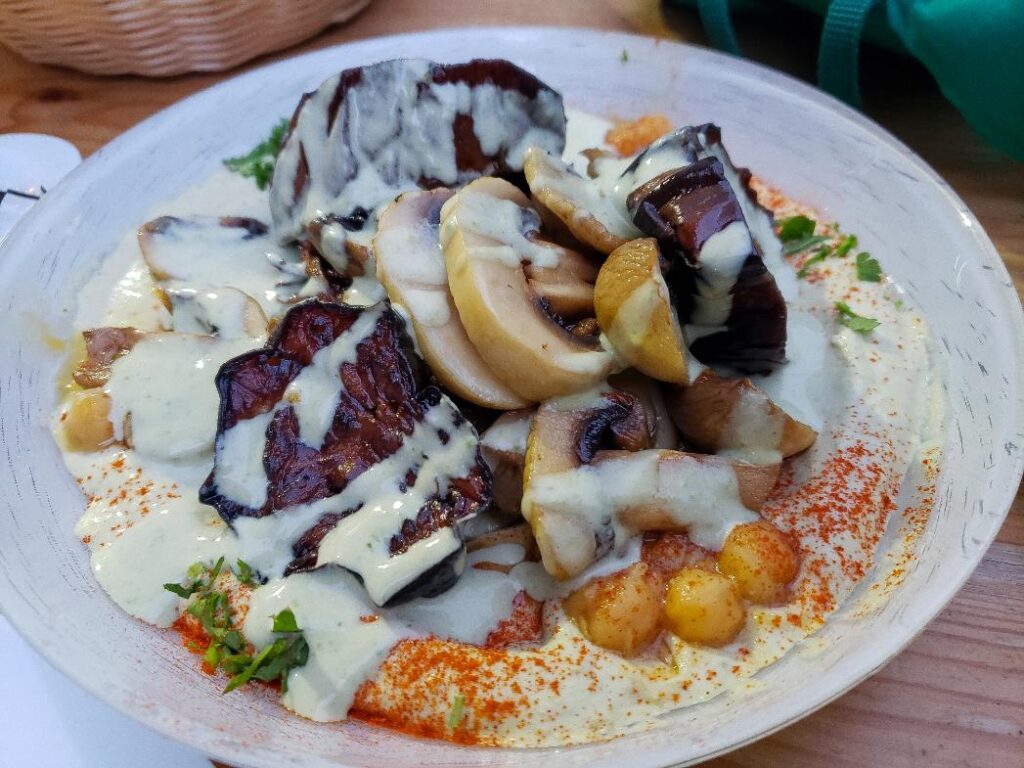
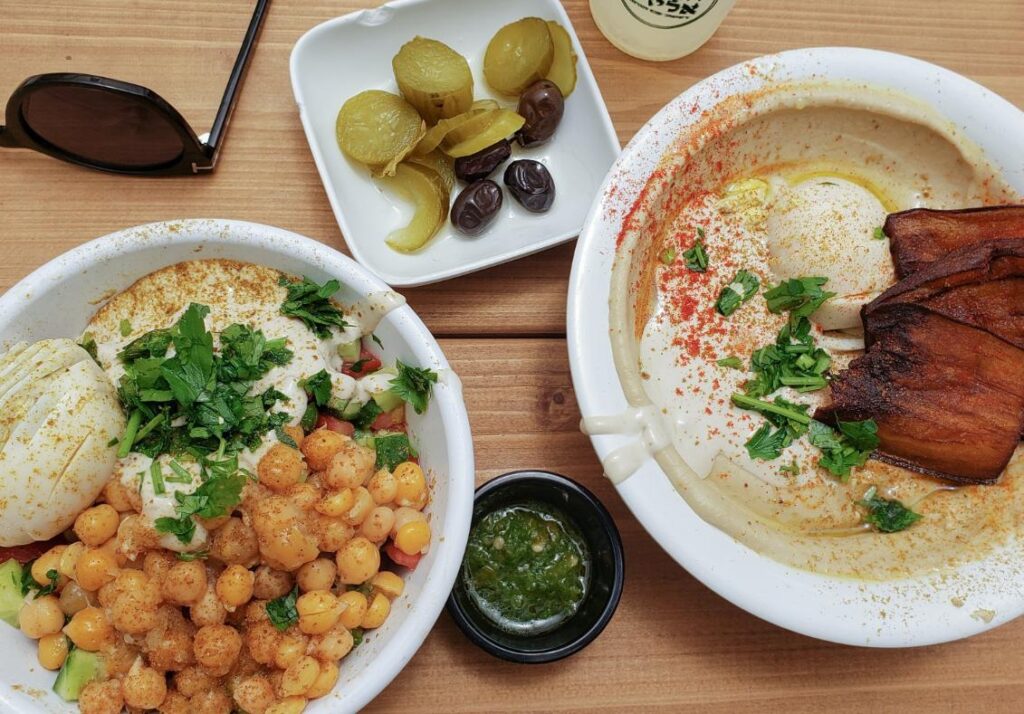
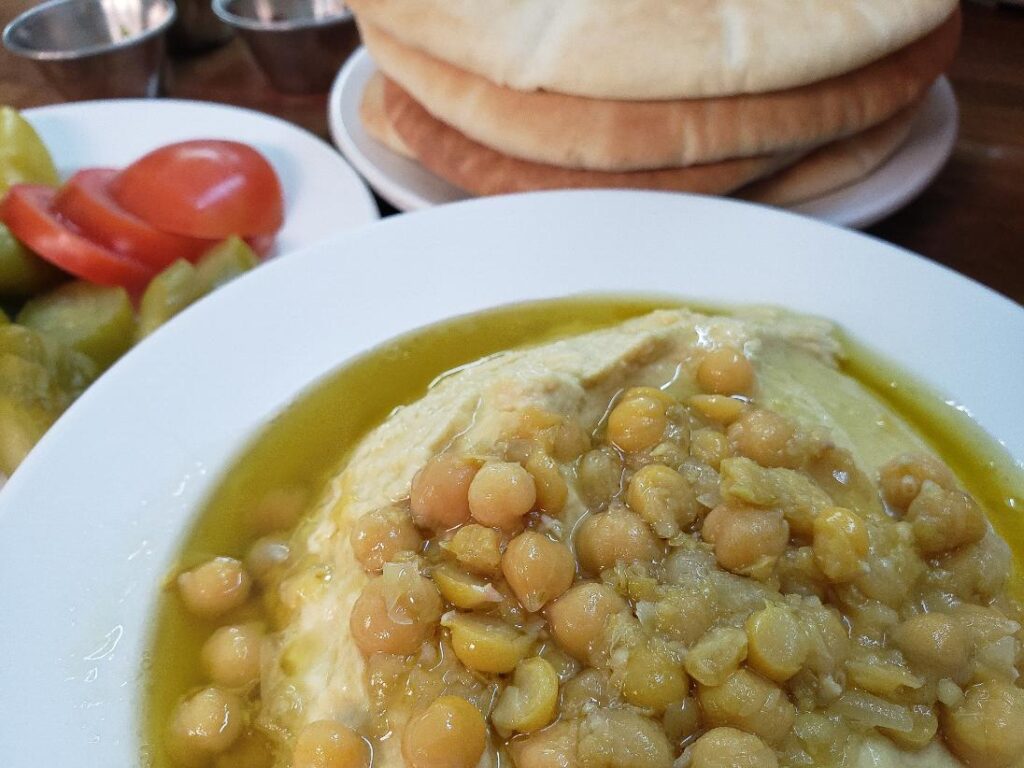
If you’re like us and come from a Western country familiar with hummus only as a prepackaged starter dip served with stale crackers or floppy carrot sticks, then you can be forgiven of any reluctance to order it as a main meal. But Israelis and Palestinians eat bowls of fresh warm hummus like Americans eat reheated frozen hamburgers…at fast food joints all across their respective countries.
Compared to the refrigerated quaggy paste found in supermarkets back home, the hummus in Israel is thinner, creamy, and still warm from being freshly blended. Typically it includes a pool of freshly pressed olive oil, a simple chopped salad of fresh onion, tomato, and cucumber, and a near limitless supply of fresh pita bread. Obviously “fresh” is the operative word here–the lack of which is the achilles heel of the Standard American Diet (SAD) I was raised on–but even without these accouterments, you can eat hummus by the spoonful.
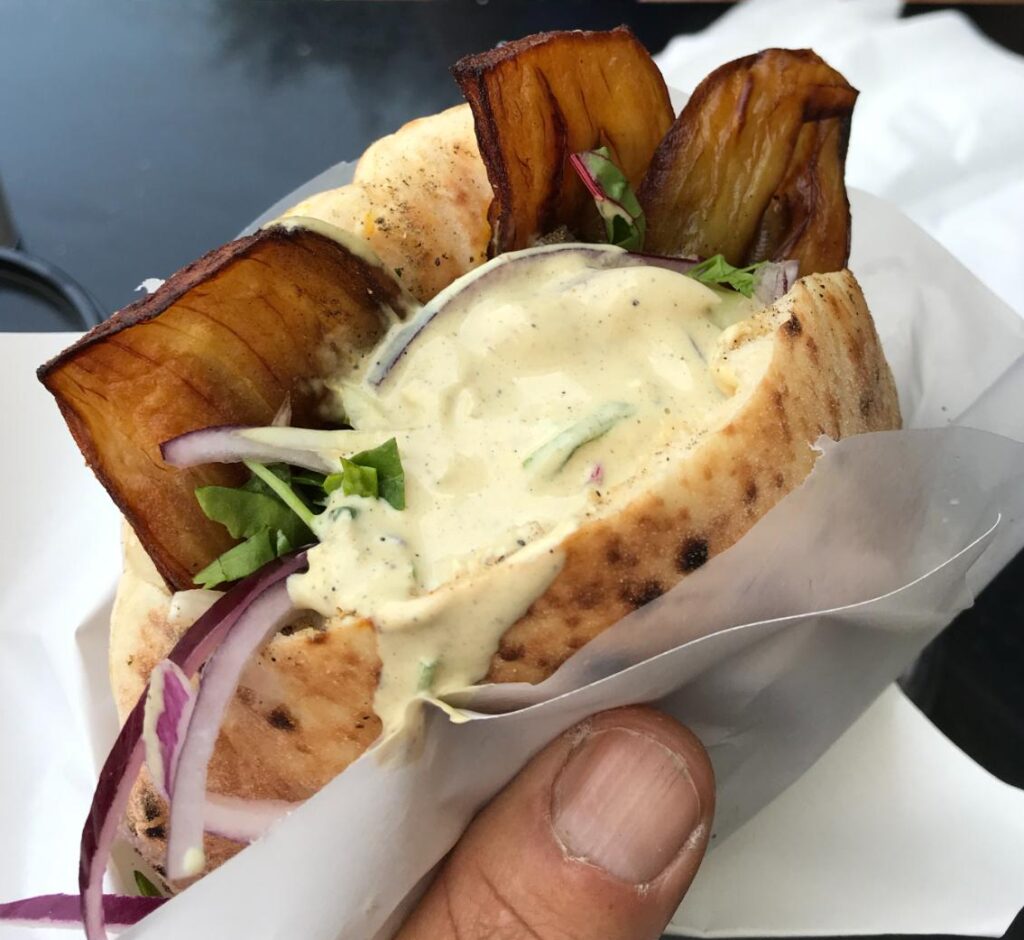
Or, if you want to up your street food game then try a sabich. After waiting in a line that turns the corner (good sign #1), Clare and I are finally at the counter of an eatery that offers just one thing (good sign #2).
“One sabich please,” I say to the sweaty shirt behind the counter who suppresses a smile at my butchering of the pronunciation, which is not sounded like the short sharp “ch” of English at all, but more like a guttural back-of-the-throat cat hawking up a hairball sound. The guy who takes our order is one of four dudes ducking and weaving around one another like orchestrated ballerinas performing on the concrete stage of a single-car garage turned into an edibles laboratory.

“You should order two,” a man behind us says in accented English.
“We’re not so hungry,” I offer an explanation.
“Well you won’t want to share, I can promise you that, and then you’ll have to wait in this line all over again.” He says to me as if ‘isn’t it obvious.’
“I guess we’ll just have to take our chances,” is my best defense.
The man raises his eyebrows in exasperation, yet resigns himself to a battle lost. “Suit yourself,” he exhales and looks away.
Israelis are anything but shy. They give opinions like flowers give pollen, to anyone that brushes their path with the hope of future fertilization. But this is also their charm, they’re never squeamish in company, always quick to help, and unambiguous about where you stand. The welcome sheet at our rented apartment includes the following warning to foreign visitors: Do not be alarmed if you hear Israelis shouting or yelling, seemingly always in argument…this is just how we talk.
Anyway, the man was right. Sharing a sabich is like sharing a pair of sunglasses…ridiculous.
Yet, without our tireless dedication to the sharing of plates, bowls, cups, things stuck on sticks, bundles wrapped in foil, and those hanging from strings, we never would have sampled so many of the culinary delights Israel offers, particularly from the foodie capital of Tel Aviv.


Furthermore, sharing meals proves a great way to keep our eating cost-effective. Turns out Israel is one of the most expensive countries in the world, where a pint of Ben & Jerry’s from the supermarket runs almost $20 USD, and a pint of beer from the average streetside bar is nearly $10. How do average citizens afford such prices? Considering Israel is one of the tech capitals of the world, they probably use sophisticated algorithms for finding the best deals.
Then again, at other times we face the surprising hurdle of finding a place open where we can spend money. An official holiday in most Western countries means time-and-a-half pay (in the US, only if you’re lucky) and shorter opening hours…apparently it takes a deadly global pandemic to actually get some time off work. Not so in Israel, where holidays–including the weekly Sabbath–see most businesses fully closed with public transit largely halted. And it just so happens that our ten-day visit coincides with four different national holidays.
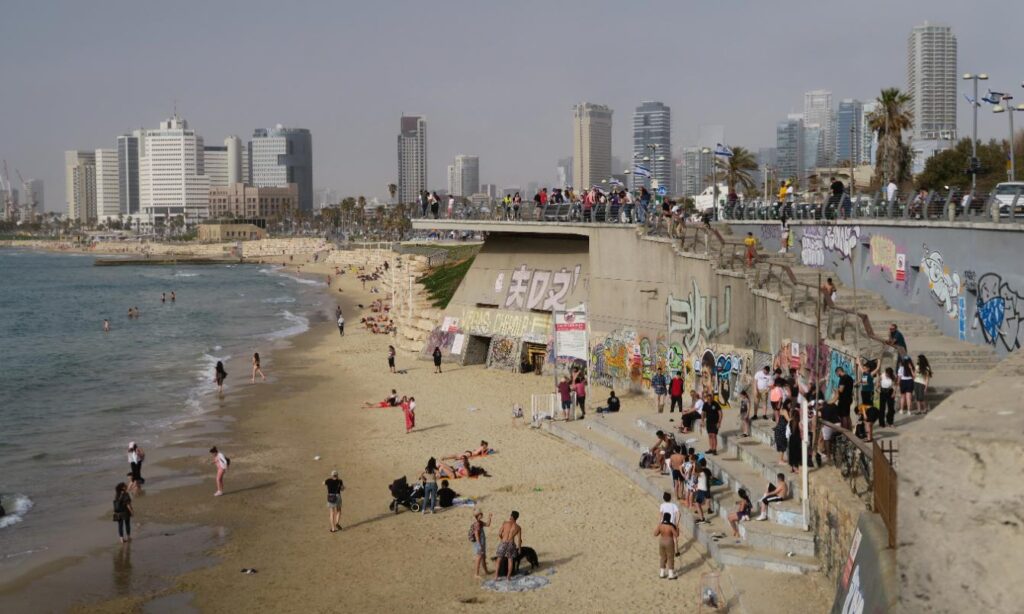
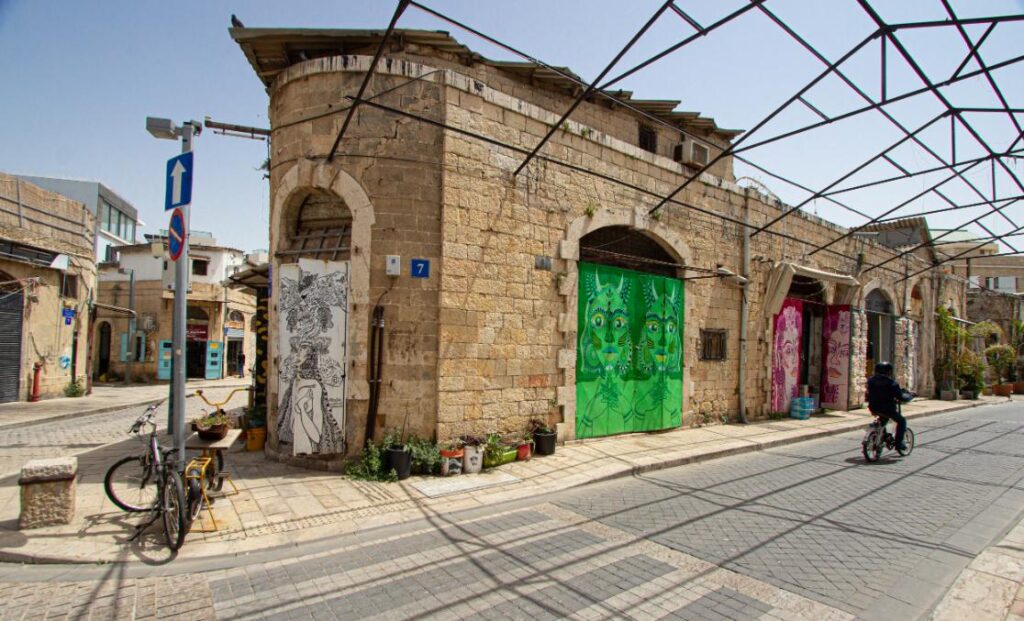
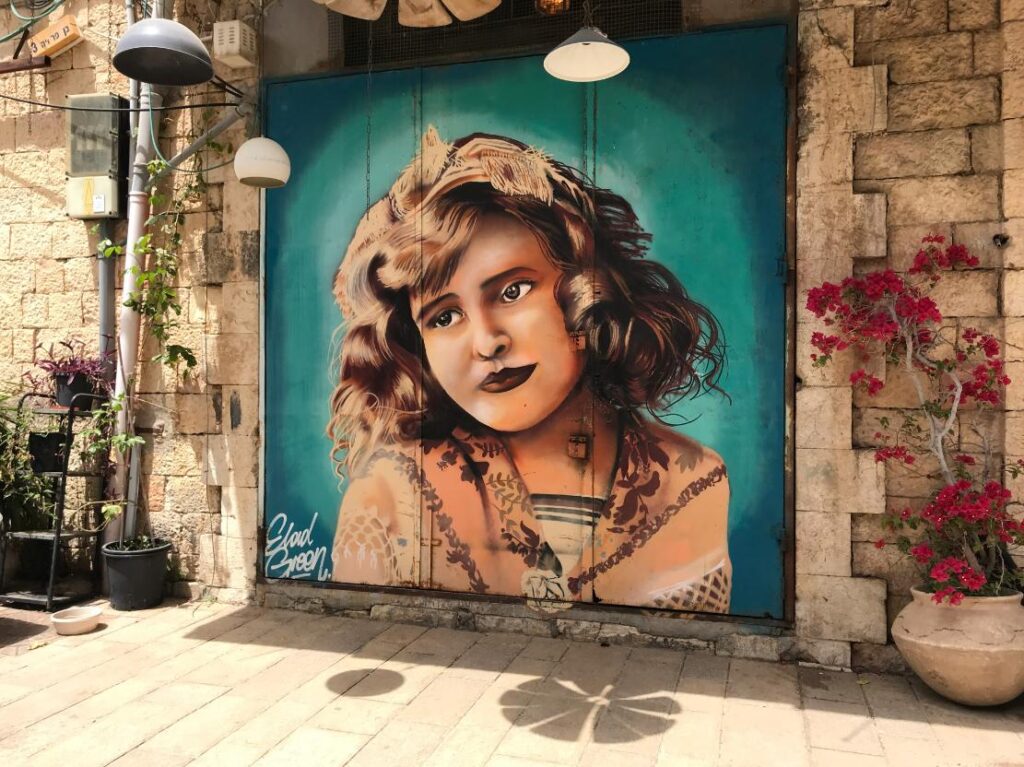
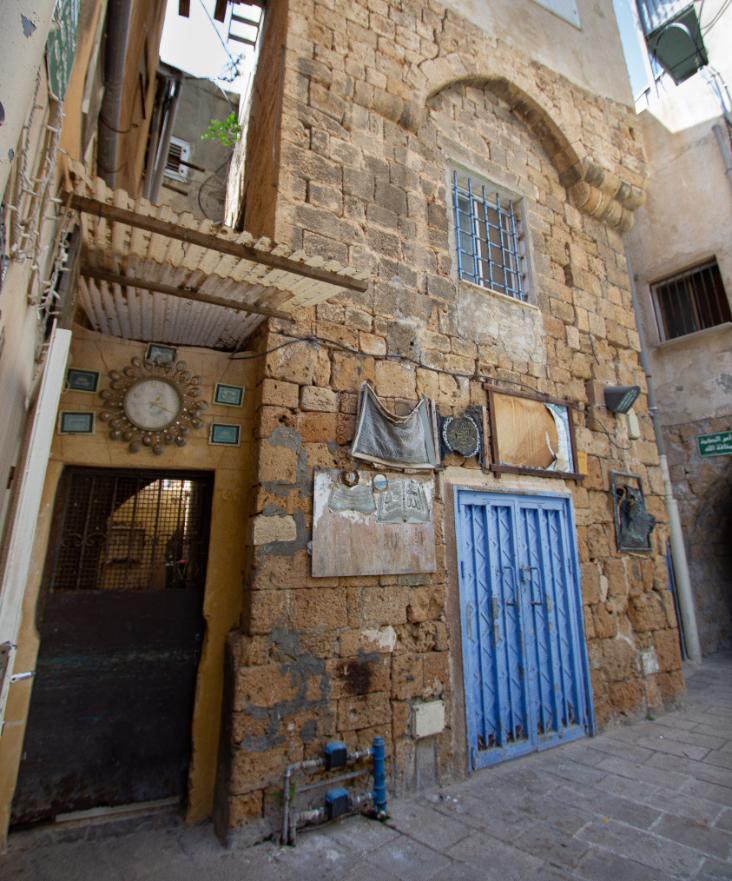
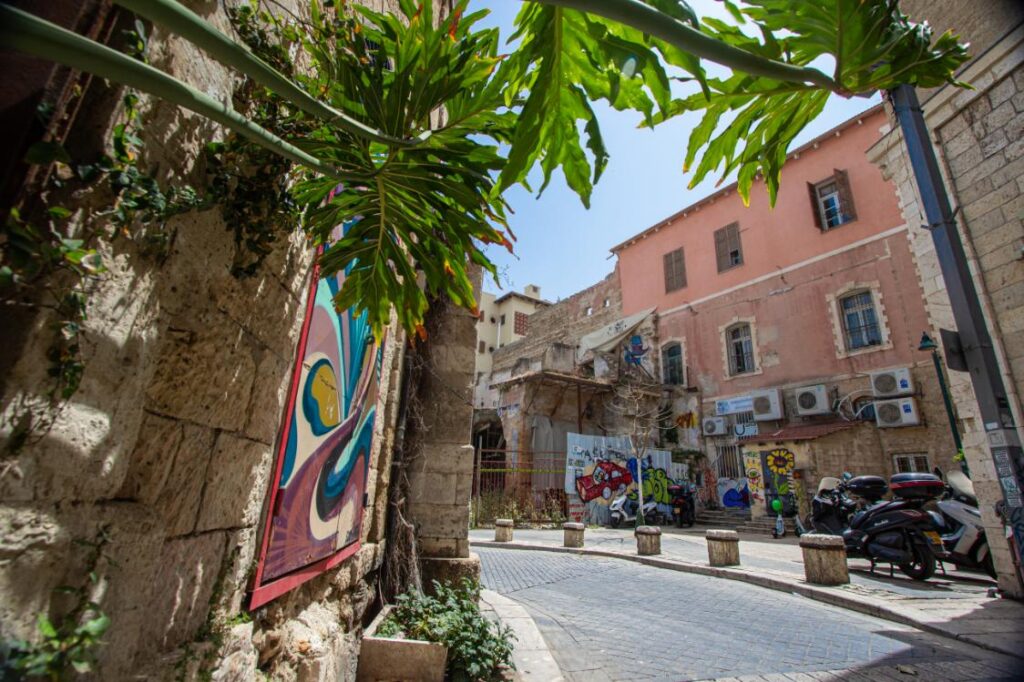
Come sunset (days are measured sunset-to-sunset in Israel) we can’t find a single restaurant, cafe, eatery, or bar in our otherwise bustling hipster Tel Aviv neighborhood that is open for business, and count ourselves lucky to grab a few bits and bobs from a small grocery store minutes before the owner locks the doors. On another morning, we’re walking the streets trying to find somewhere open for breakfast when large sirens begin sounding. Suddenly every car, truck, bus, moped, or bicycle on the busy boulevard comes to a quick stop–some in the middle of the intersection–and all silence their engines. The occupants step from their vehicles and stand in the street to observe a two-minute silence for the victims of the Holocaust on the national memorial day, before regaining their cars and carrying on.


Israelis may know how to stop and take a break, but they also know how to celebrate. For national Independence Day the municipal government erects some five different stages along a busy pedestrian street each one hosting a rotating cast of live musicians and DJs that practice their craft until the wee hours, all of which is free and open to the public. Or, for a small fee you can do what we did and rave within the fortifications of an ancient castle…thumping electronic beats ricochet off worn cobblestones, psychedelic light-shows swim across battle-scarred ramparts, and arak-liquor mixes pour liberally from rehabilitated iron-clad dungeons…oh, but don’t forget to bring your own cup, Israelis know how to keep events eco-friendly.
Aside from well-organized national holidays, Israel offers fantastic national parks, monuments, and places of historical interest. We make good use of a week-long park pass and a three-day car hire to explore the stark beauty of the Negev desert, which dominates the southern half of the country. The skies remain too hazy to enjoy the ‘star-gazing capital’ of Mitzpe Ramon at night, but the oases, Nabatean ruins, and geological craters of daylight hours are striking, interesting, and educational. And the last-stand of Jewish resistance against the Roman empire at Masada is a remarkable story in an exquisite location.


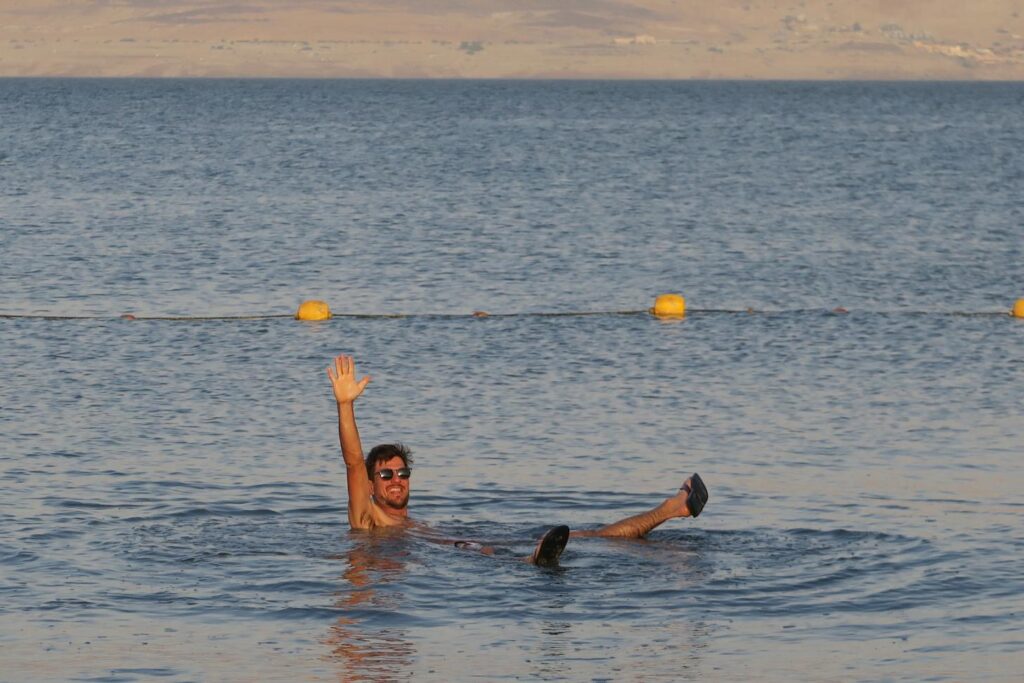
And what trip to this region is complete without a dip in the Dead Sea? We manage to enter the sea just before closing time at sunset, but I don’t know if what we do counts as “swimming.” The saline-rich waters (about ten-times that of the ocean) make any movement beyond floating a difficult proposition, ducking your head below the surface can result in painful consequences (just ask my dad from his visit years ago), and the water leaves you coated with an oily-like residue that keeps the nearby pay-per-showers in high demand.
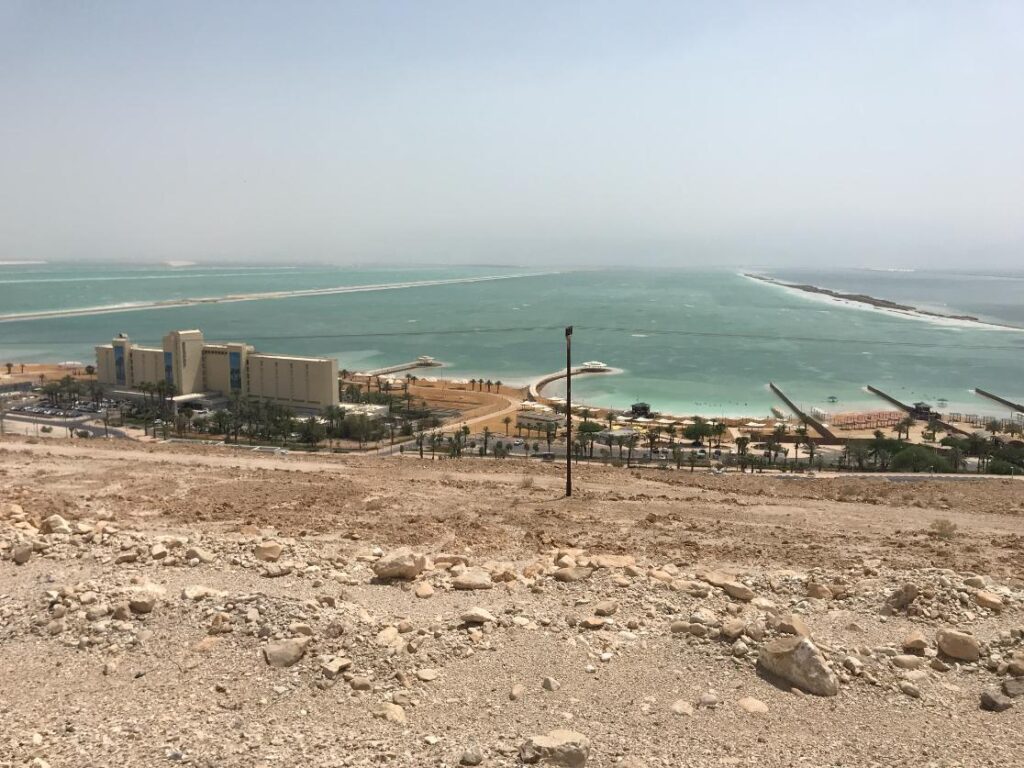
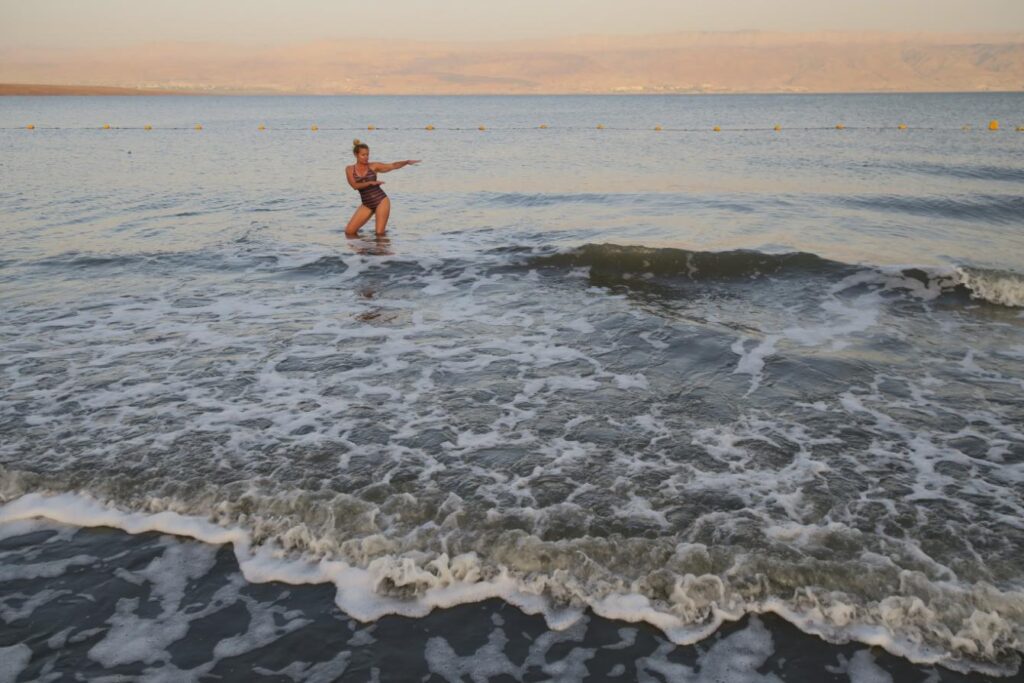
Sadly, the uncomfortable march across slaggy mud hiding dangerously sharp rocks just to reach the water’s edge is ever increasing because the Dead Sea level drops by as much as one meter per year! The plan to raise levels with water from the Red Sea is fraught with controversy because despite its high salinity level, the Dead Sea is actually a collection basin for fresh water, so augmenting it with sea water with only further increase it’s already exceptional salt-content doing who-knows-what to the unique micro-ecosystems within.
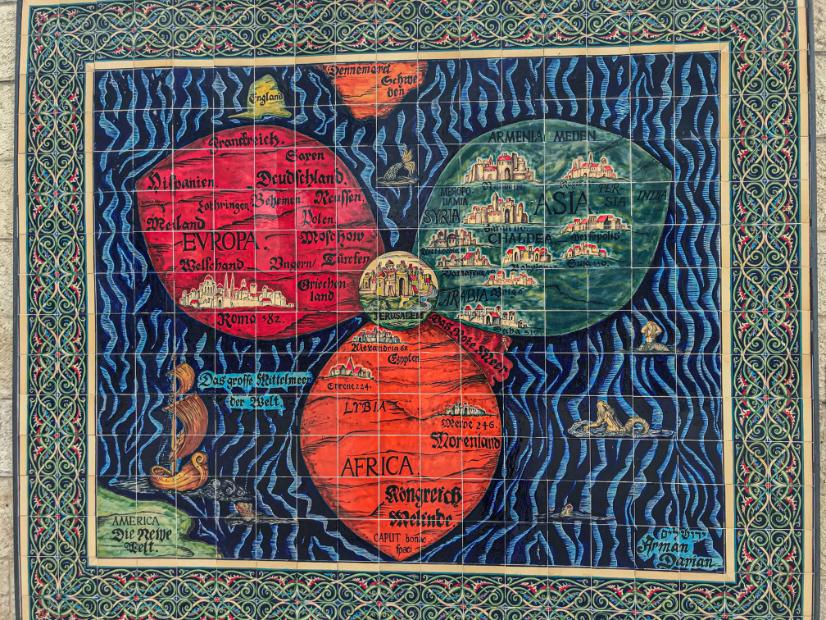
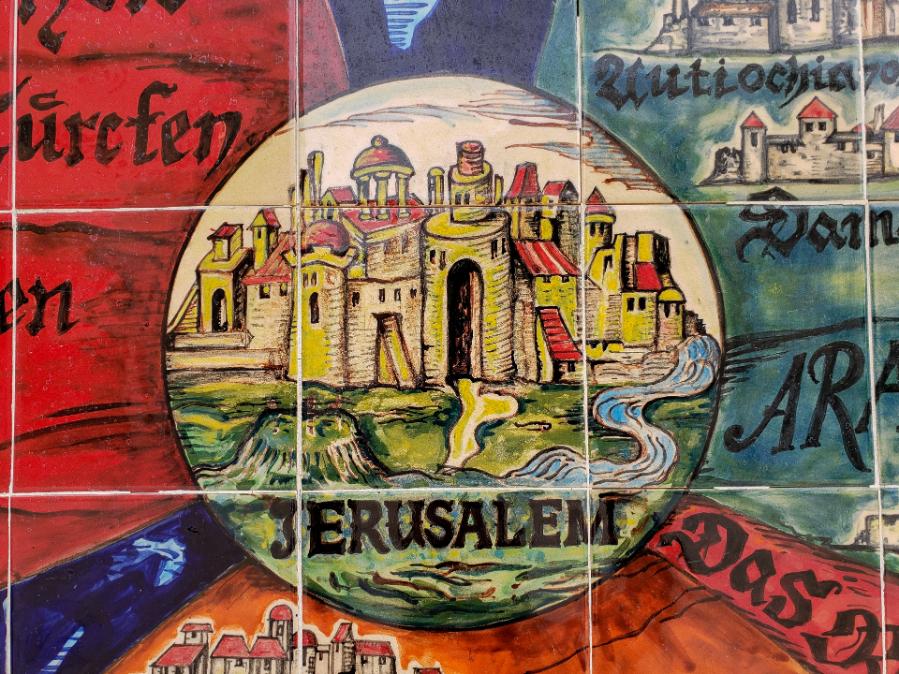
We conclude our tour of Israel in Jerusalem, “the navel of the world,” and a city that makes touristing a fulltime job. Although we’ve maintained a brisk pace the entire trip–Clare’s smart watch can attest to all the kilometers we hoof–such is only a warm up for Jerusalem, where we set alarms, break daily records, and still fail to tick every box on our list. Three full days of pounding pavement in the old city result in a few bodily aches and squeaks, but I reckon we give the four quarters as good a run as any, and pass through just about every gate in the ancient city walls along the way. Saint James’ Cathedral; Church of the Holy Sepulcher; the Citadel; Hall of the Last Supper; the Ramparts; King David’s Tomb; Mount Zion; the Western Wall; the Temple Mount; the Temple Tunnels; Dome of the Rock; Hurva Synagogue; and yes, even Charlie’s Cheeky Kebabs…we do it all.


Even though I was raised in a private Christian school where we read the Old Testament everyday, I’m nevertheless surprised by how many names, dates, and stories come flooding back from my past, illuminating all the sights in front of my eyes. This is a rare place where ancient history still crackles with present import, where names on the map haven’t changed in almost ten-thousand years (like the city of Jericho for example), and where every worn cobblestone floods the imagination with “who stepped here before?” Clare may not know Abraham from Adam, but she’s a good sport all the same and pretends to be listening with interest as I recount childhood bible stories. Truly, you don’t need a religious background to be swept up by the awe and grandeur of the Holy Land, but you may want an armed escort.