“It may be a bit on the pricey side,” our friend Jens explains over a beer at the marina after telling him of our plans to visit Israel, “But if you want to see a real glimpse of Palestine and learn a thing or two in the process then a booking with Green Olive Tours is worth every penny.”
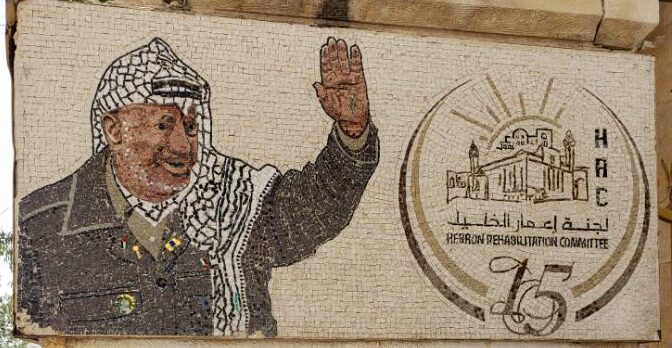
Jens is now a “retired” journalist, but for some years he lived and worked in Israel and at one point was even granted an interview with Yasser Arafat, the former president of the Palestinian National Authority. As usual, it’s worth taking the recommendation of someone who knows his shit.
But because our available dates for a tour coincide with the Muslim holiday of Eid–the 3-days of feasting and rest celebrated after 40-days of Ramadan fasting–there is some uncertainty as to whether the tour will take place at all. Green Olive reverses their initial cancellation, but then warns that parts of the tour will be inaccessible due to the holiday, and that they need a minimum of three participants to make the tour cost-effective…luck for us there’s a last minute-booking and so we’re informed by email the night before that the tour is on.
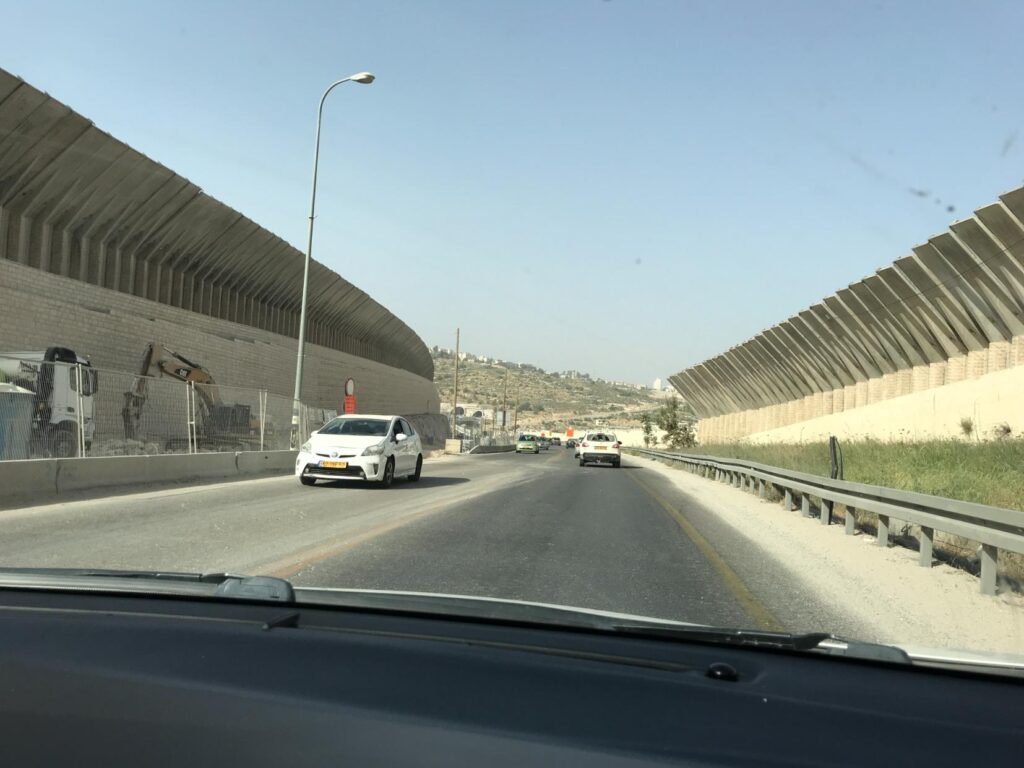
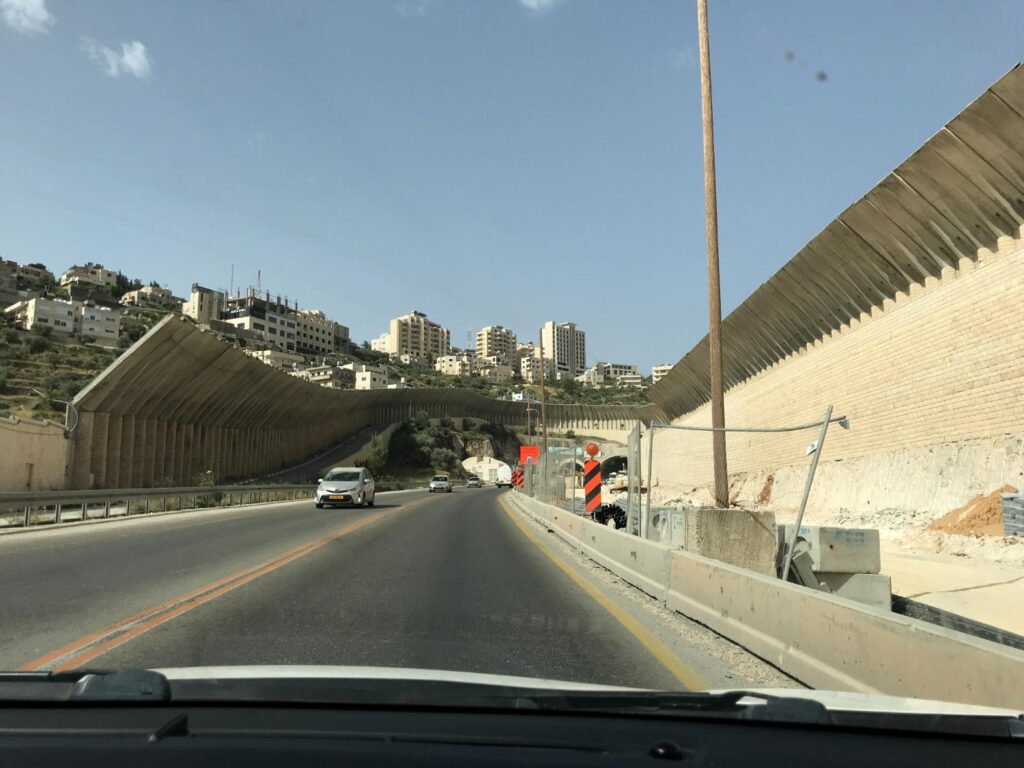
Running a tad late, Clare and I scurry up to the iconic Jerusalem YMCA where we meet Becca (the third booking), our guide Mohammad, and his son who tagged along for a ride into town. Mohammad is eager to get underway, so he quickly gives his son a kiss goodbye before shepherding us to his personal car parked nearby, and soon we’re on the road. Upon leaving the city, it’s impossible to ignore the massive walls and fences that nearly enclose the highway and provide a cocoon of protection from any possible roadside threat…not an easy place to hitchhike, I think to myself, but then waiting for a ride in the desert never is.
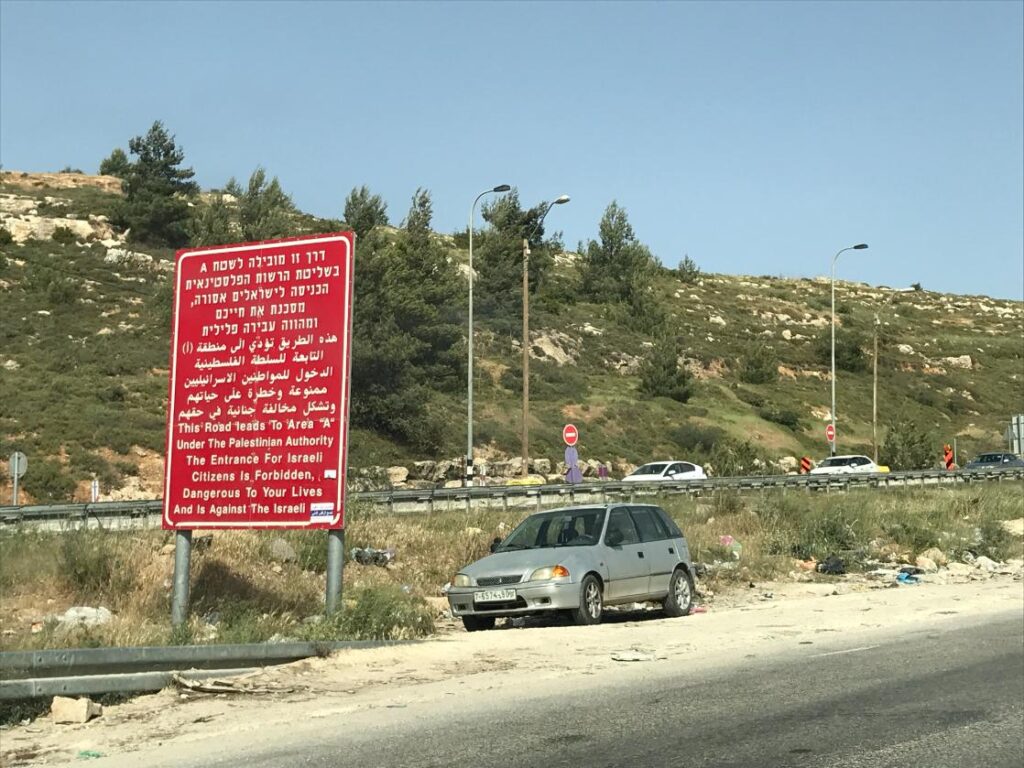
Mohammad is a Palestinian resident of East Jerusalem–the place where his family have lived for generations–and is therefore entitled to use special license plates on his car, which allow access to all major highways and ensure a lack of hassle at the handful of roadside checkpoints we encounter. In fact, we are even permitted to pass through the shiny and guarded gates of the Beitar Illit Israeli settlement. Unlike the patchwork of Jerusalem, or the grime of Tel Aviv, the streets in the settlement are smooth and striped, and the buildings crisp and clean.
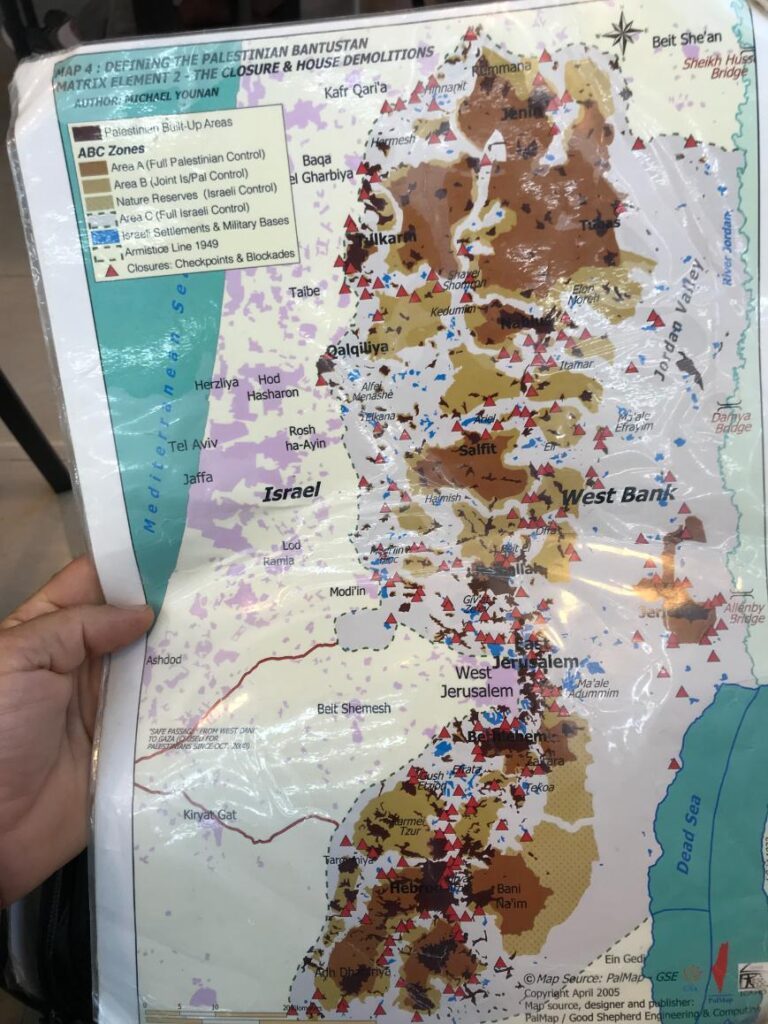
“First,” Mohammad begins his instruction from behind the wheel, “The government provides legal protections and pays top-rates to Israeli contractors for the construction of a settlement like this one on contested land, land that might otherwise be a risky investment. But, because of other policies in place that I’ll soon explain, building in these ‘hot-zones’ proves to be a financial windfall for those involved.”
We make a turn and wind through a neighborhood lined with neat rectangular 2-4 storied apartment buildings. “Then, the government offers substantial rent-subsidies to entice Jewish citizens to move into what might otherwise be considered ‘dangerous’ areas. Try finding a decent place to rent in Jerusalem for a family of four, and you can see why the houses here are full despite the ‘risks’ involved.”
We turn down another street with lots of people out and about. “Look at how everyone is dressed,” Mohammed asks, “What do you notice?”
There is no mistaking the pervasive sight of orthodox dress. Men in full black suits, long curly sideburns dangling from under broad-brimmed black hats. We make another turn and pass a large synagogue flanked by two massive parks where women wearing long dark layers and tightly-pinned head coverings push prams and corral their waist-tall children–many of whom are already wearing two-piece suites–to their sides.
“Besides housing, the government provides subsidies to residents engaged in religious study, and then again more subsidies for those that have children. In effect, religious Jewish citizens are paid to occupy the settlements.”
Mohammed flicks the indicator, turns the car, and whirls us past a supermarket parking lot full of cars. “Businesses are also subsidized to operate here and are even allowed to hire Palestinians, whose cheap labor ensures everything remains clean and stocked at bargain rates.”
“Even the public transit is completely free for residents, who can travel to and from Jerusalem in safety and ease.” Another turn past a small bus station, with different colored buses in various states of repair.
“But this is not so for the Palestinian workforce. Those who do manage to get work-permits and find employment must pay for the privilege of working here by taking separate buses that use different routes,” he points through the window, “Like that green bus there. Nor are they allowed to visit any other businesses or residences within the settlement, only the bus station and their place of employment.”
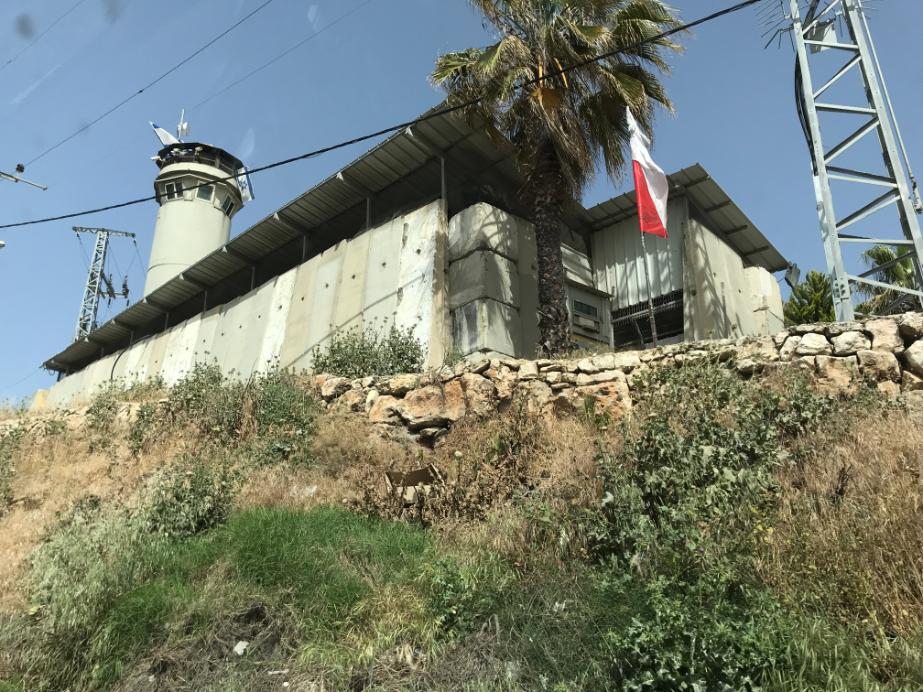
We exit the settlement and pass a series of heavily fortified buildings manned by military personnel. “Of course every settlement comes with a contingent of the Israeli Defense Force (IDF), so safety on the settlements is not really an issue…not for Jewish citizens at any rate.”
“In fact,” Mohammed further explains as we cruise down the highway, “the IDF is obliged to protect Jewish citizens wherever they may be, whether on legal or illegal settlements. This provides tacit protection to those more zealous Jews who feel entitled to land that is already tenanted by others or that is otherwise considered off-limits by the state.”
“This of course is one of the biggest Palestinian points of contention with the state of Israel,” our guide continues sharing as we drive deeper into the West Bank. “Our lands are being continually encroached upon and even attacked by the illegal actions of zealous Jews, who are fearless because they have the unequivocal backing of the Israeli military. When we attempt to petition the judicial system we are told that because the IDF is involved any issues must be handled under military court, which is arbitrary and convoluted even if you are an Israeli citizen, but hopeless if you are Palestinian. So we are caught in a vicious loop of a legal loophole for which we have no recourse or escape.”
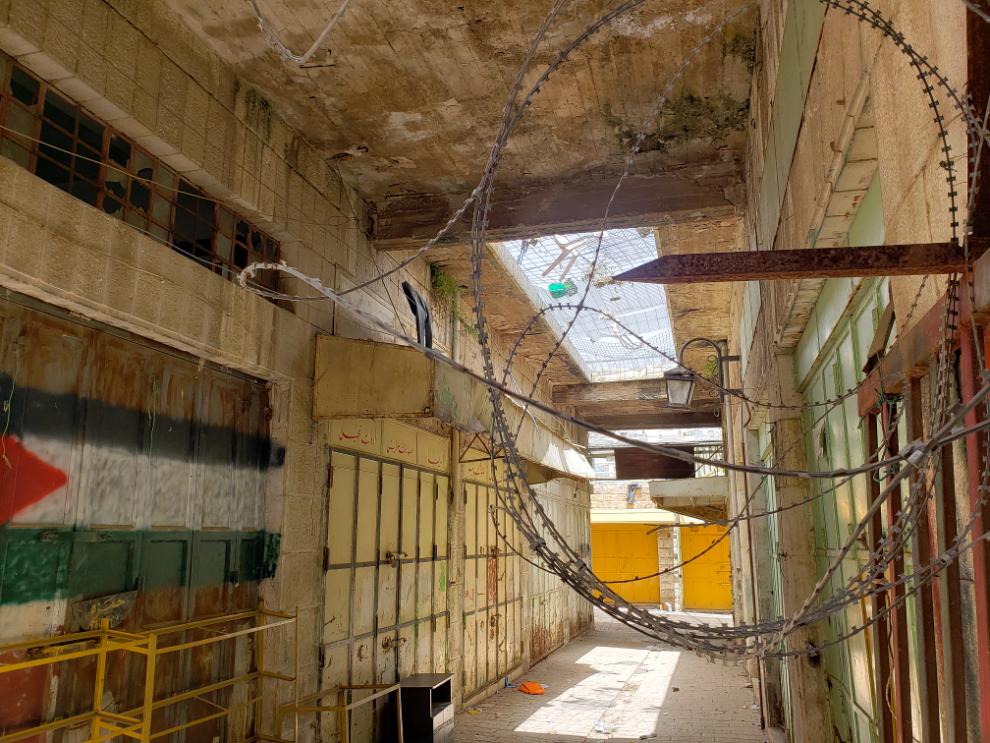
Before long the taller buildings of Hebron’s new city come into view, and soon after the car is parked and we are strolling the dense streets of the old city. The 40-day fasting period of Ramadan finished only yesterday, so for 3-days Muslims will celebrate Eid, a time of feasting and resting at home with loved ones. This means that only a paltry handful of shops are open and what would otherwise be a bustling commercial and social hub, lays dormant, shuttered, and eerily quiet.


Obviously this is an underwhelming time to tour one of Palestine’s most vigorous cities, but, unencumbered by the press of business, this quiet does afford the chance for longer and more thoughtful chats with the sporadic few locals we encounter, most of them on their way to visit another household of relatives with a bag of sweet treats in tow to warm their welcome. “Eid Mubarak”–Blessed Feast–we say to one another, at which point the stranger will likely stop to chat and share something from the bag.
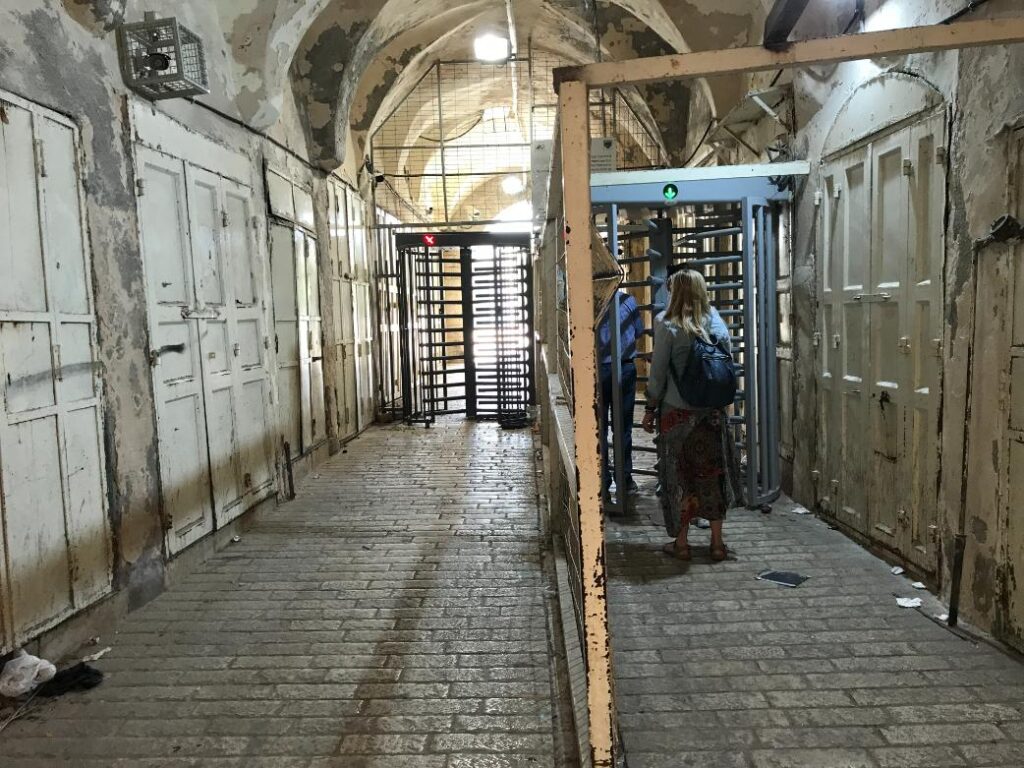
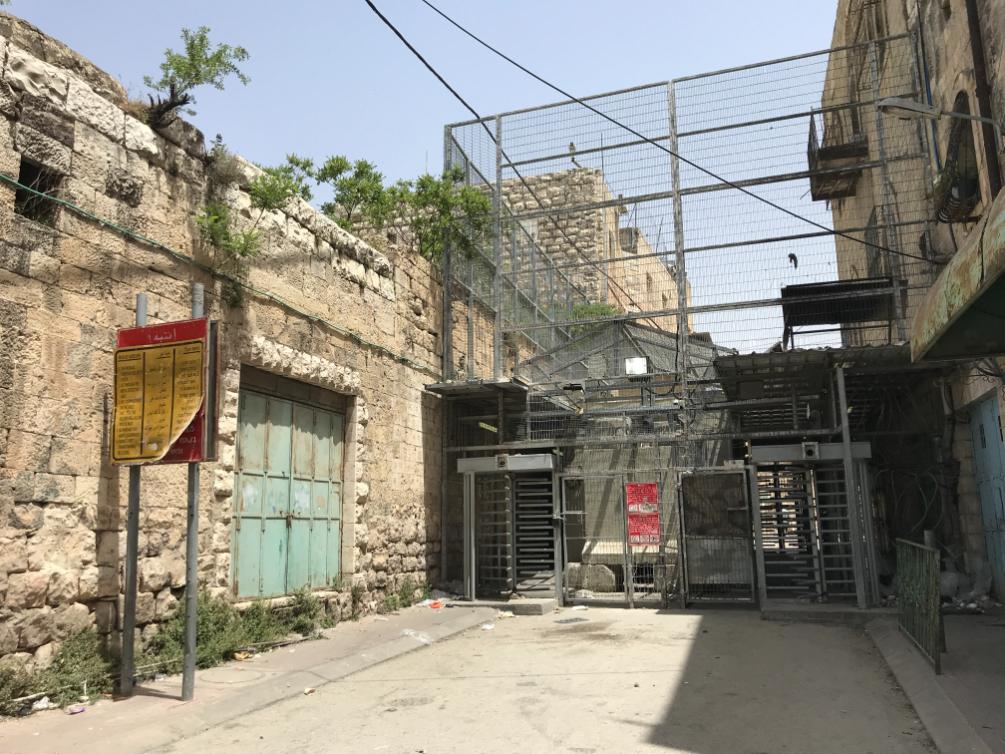
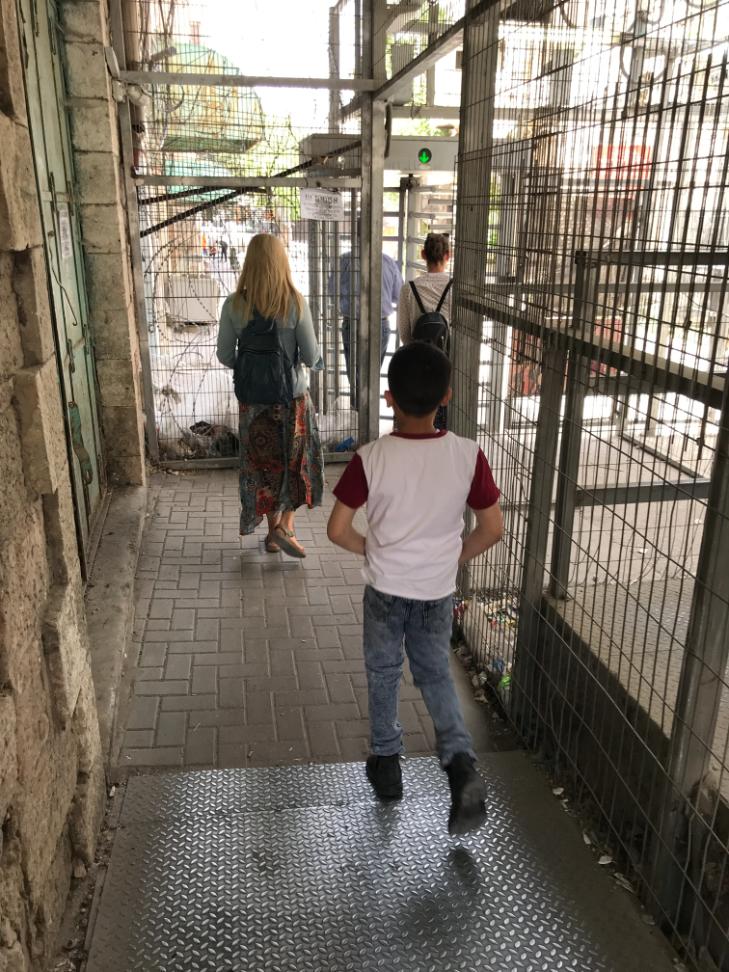
We come to a military checkpoint, flanked by long trains of steel fencing and concrete barricades to help separate and organize what must usually be a teeming crowd, though not so today. We empty our pockets, pass through a metal-detector, and then hand over our passports. There’s a bit of confusion about what we are doing in this city at this time of quiet, but our foreign IDs and warm smiles eventually win them over and we are granted access to the road.
“Twenty years ago the government of Israel took over and rebuilt this road, which runs directly through the heart of the old city, in order to connect two illegal Jewish settlements growing on the outskirts.” Mohammad explains this history as we stroll along an otherwise deserted stretch of pavement, the three of us tourists casually snapping photos from our phones, hoping to capture a glimpse of something we’ll never understand.
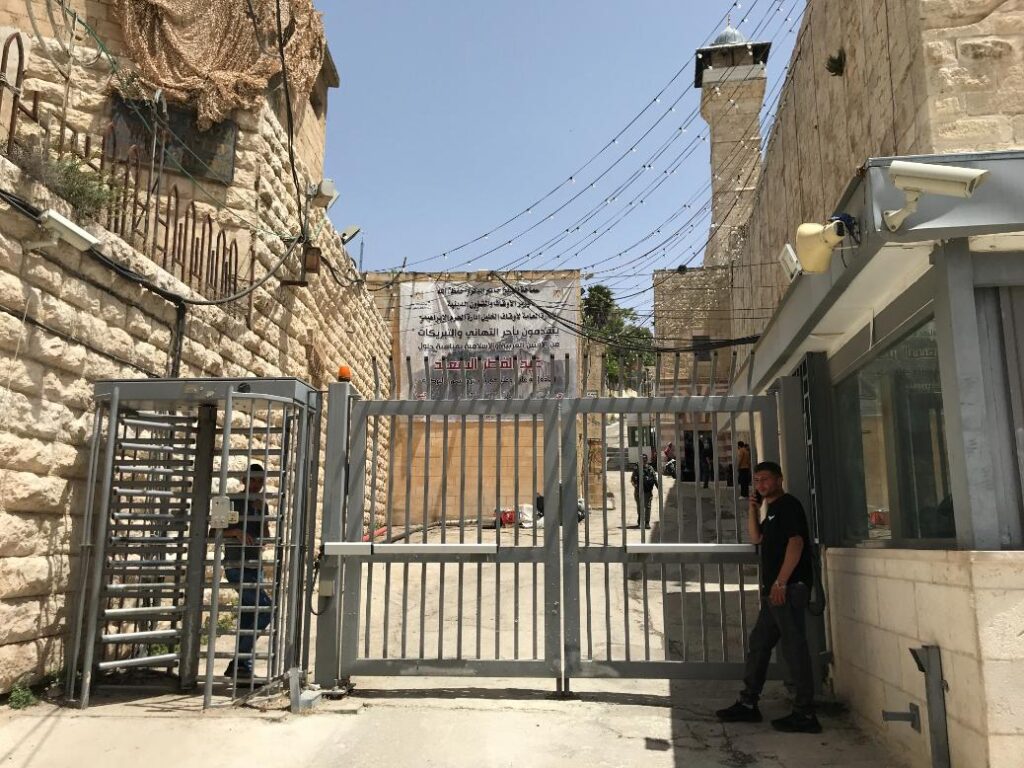
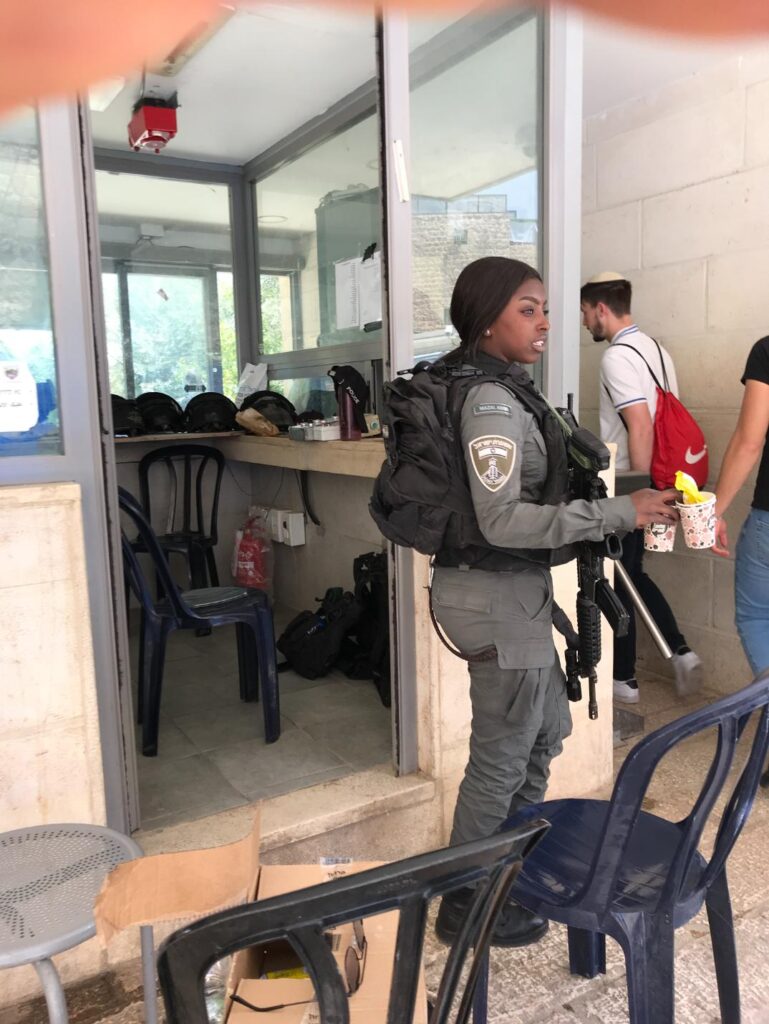
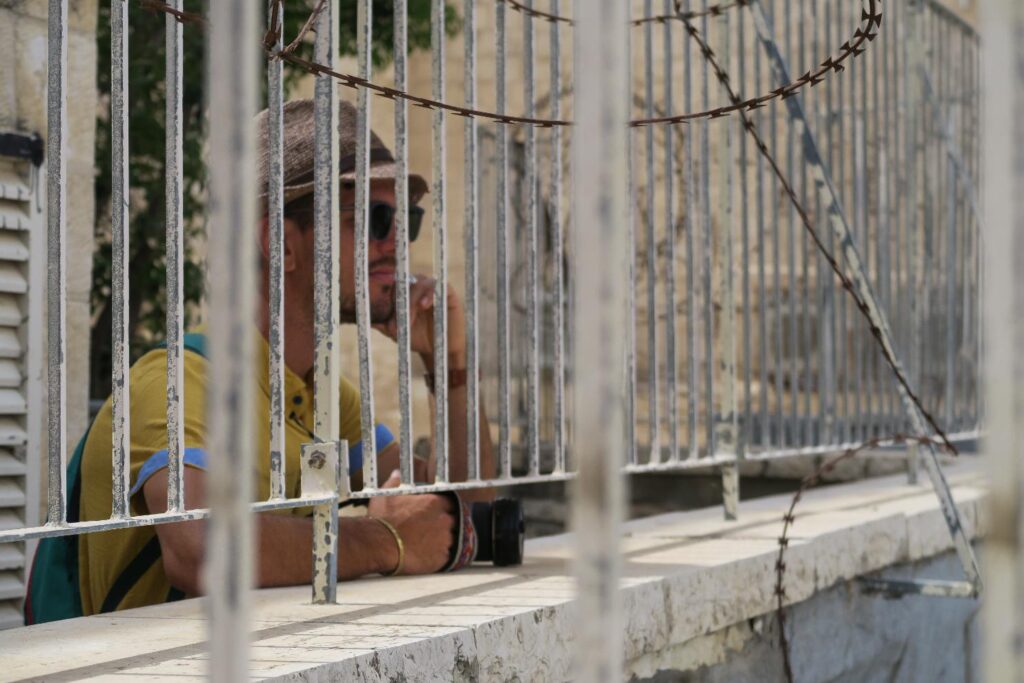
“And once a road is open for Jewish citizens to travel, it must be protected.” He points to a watchtower perched at the top of a nearby hill, “What do you see there? Or over there?” He points to another. “These are military guard stations, and now they are throughout the Palestinian city of Hebron.”
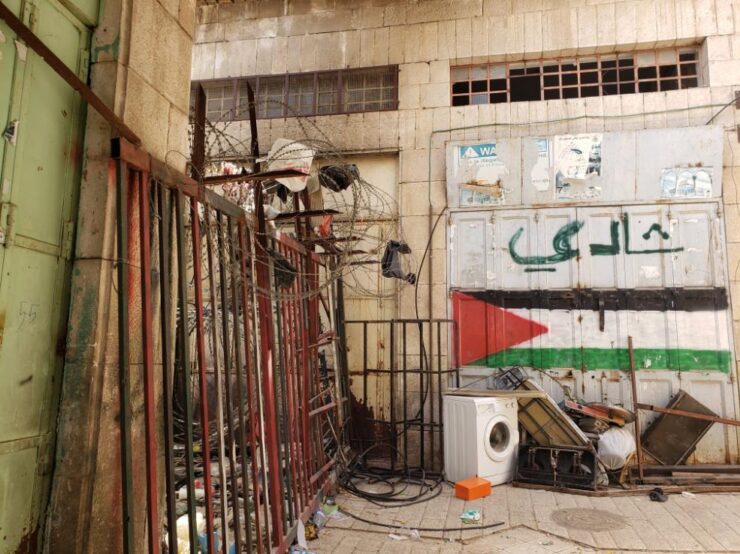
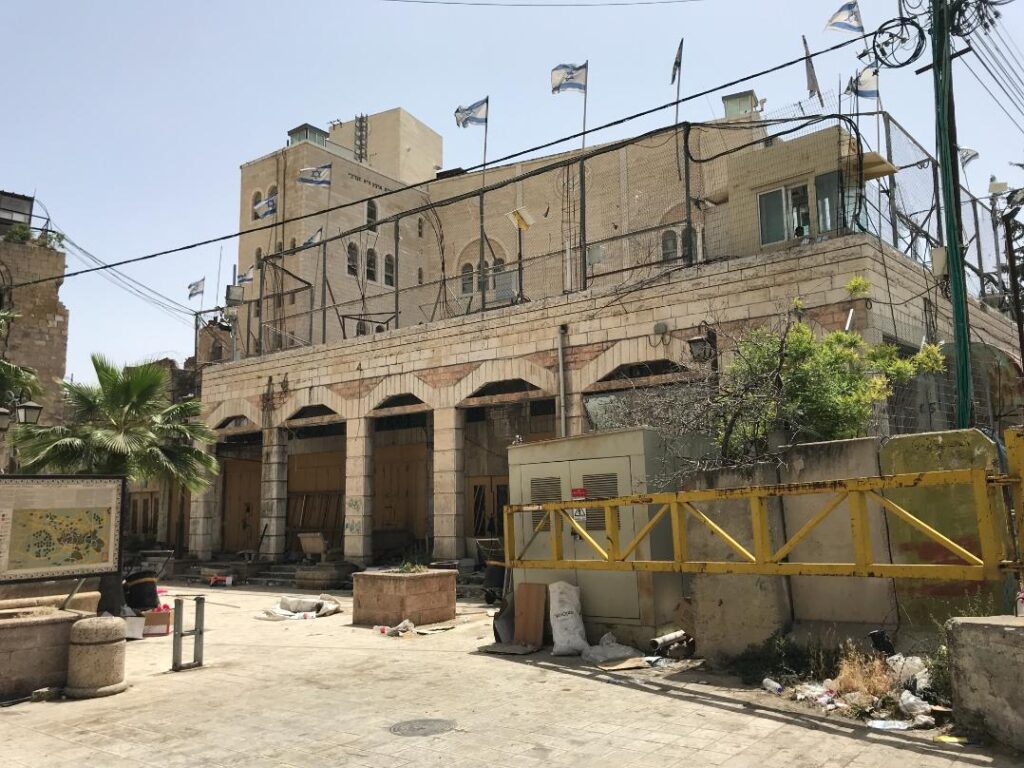
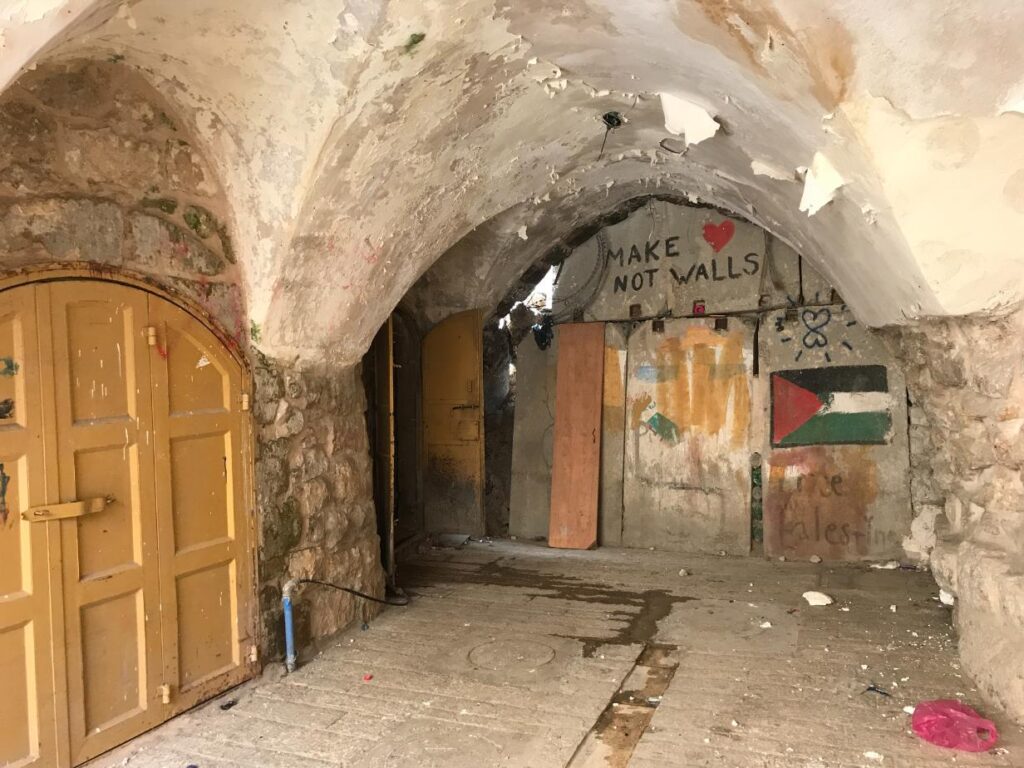
“Furthermore, the IDF says that any Palestinian property adjacent to a Jewish road is a security risk, and therefore must be vacated.” We continue our walk down the road before Mohammad pauses and ushers us to take a closer look. “You see all of these doors…notice they are welded shut.”
By now we’re accustomed to seeing shuttered doors, so they don’t stand out at first, but it soon becomes apparent that every door and window along this road isn’t simply closed and locked, but substantially welded, barred, or otherwise permanently obstructed.
“But I remember this neighborhood,” Mohammad reminisces with a smile, “It used to be bursting with activity, sounds, and smells. In fact, my favorite bakery used to be just there,” he points across the street to a doorway that is now filled with bricks and mortar.
“These are all Palestinian properties, but the owners–all with legal deeds in their hands–are no longer able to live in their houses or operate their businesses. These otherwise valuable properties stand abandoned and neglected. Weak promises have been made at various times by the government, but nothing has come of it…this has been going on now for over twenty years!”
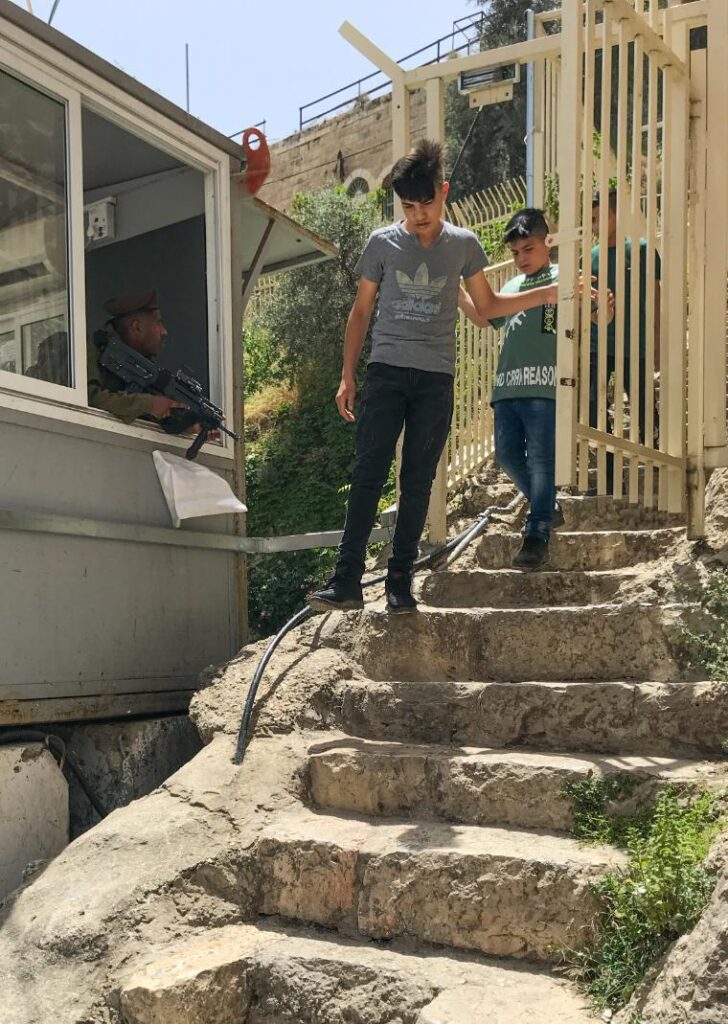
We come to another checkpoint and while our passports are being inspected, three Palestinian boys, all approximately 10-years of age, approach from a house on one side of the fence hoping to cross to the other, most likely to visit relatives for the Eid holiday. Like us, they must show valid identification, but even despite their young age and cautious demeanor, the soldier actually trains the barrel of his rifle on the group, his finger literally on the trigger, while he awaits talk-back from his shoulder-mounted radio, and then briskly gives them a nod to move along. Minutes later, we catch up with them where we all wait to pass through industrial turnstiles that will return us to Palestinian streets.
We’re once again strolling through the deserted and winding alleyways of the old city, when there’s an eruption of children’s laughter and a pack of boys come running down the street shooting at each other with orange-capped toy guns. What boy doesn’t love a toy gun, but I am struck by the extra layers of significance such weapons have for Palestinian children…especially after just witnessing three of them literally at the end of a barrel. Of course these kids want to play with guns, but instead of cops-and-robbers, it’s occupiers-against-resisters.
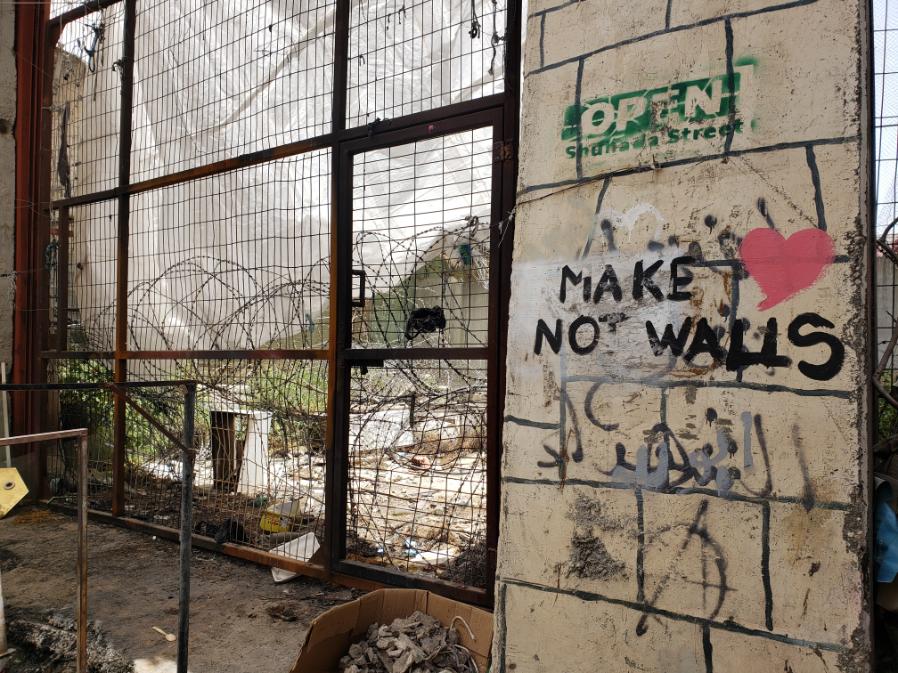
After stopping to get some water, we come to an area where a variety of make-shift fencing, chicken wire, and tarps create a sort of prison awning overhead. A nearby shop teller notices my perplexed observations of the erratic roof and implores our guide to translate.
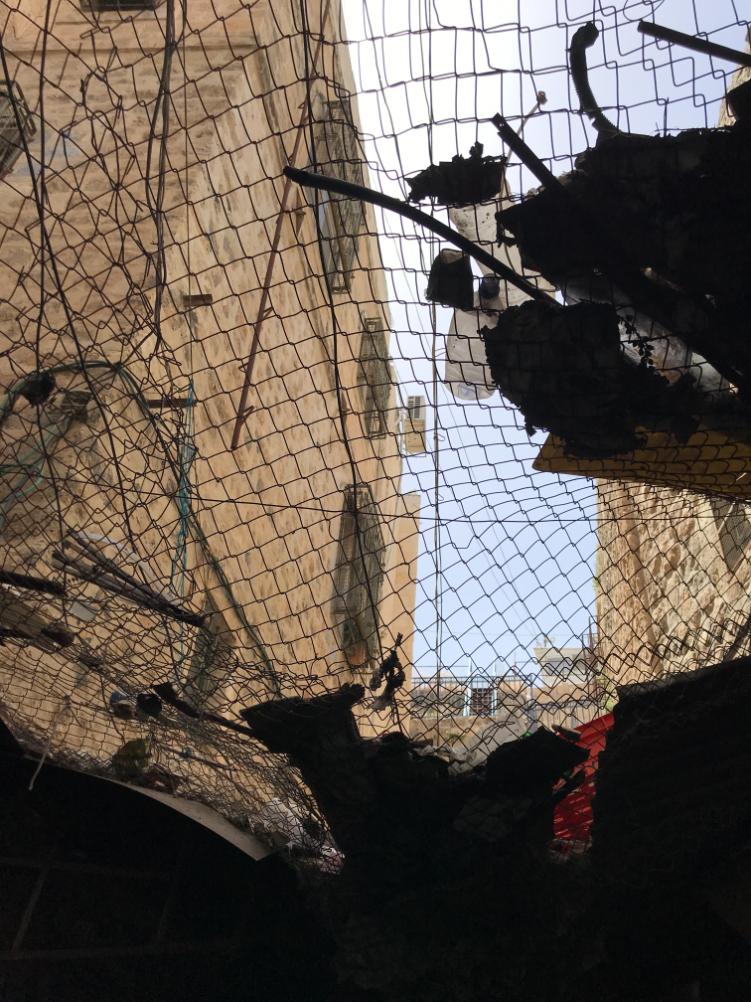
“The Israeli road runs just above, there,” he points to a section of concrete barriers at the top of a wall, “and it is not uncommon for Israelis passing by to throw things down upon us here.”
He pauses to let the idea of this sink in.
“Naturally we inform the police, but nothing is ever done, so we must take action into our own hands. We erected the wire cages to provide some protection against the many rocks, rubble, and garbage that are thrown down all the time, but the Jewish people are persistent. They began to throw cups and bags full of liquid, which of course pass through the cages and are difficult to divert. The worst is urine, because of the smell. If any gets on my goods, they’re ruined.”
The man’s shop, displaying mostly trinkets and clothes, also acts as an amateur museum showcasing old photos and the excavated remains of a 1000-year-or-older grain mill that still dominates the central floor of his shop. We all have a look around and admire his handiwork, and just before leaving the owner shares the last of his feelings.
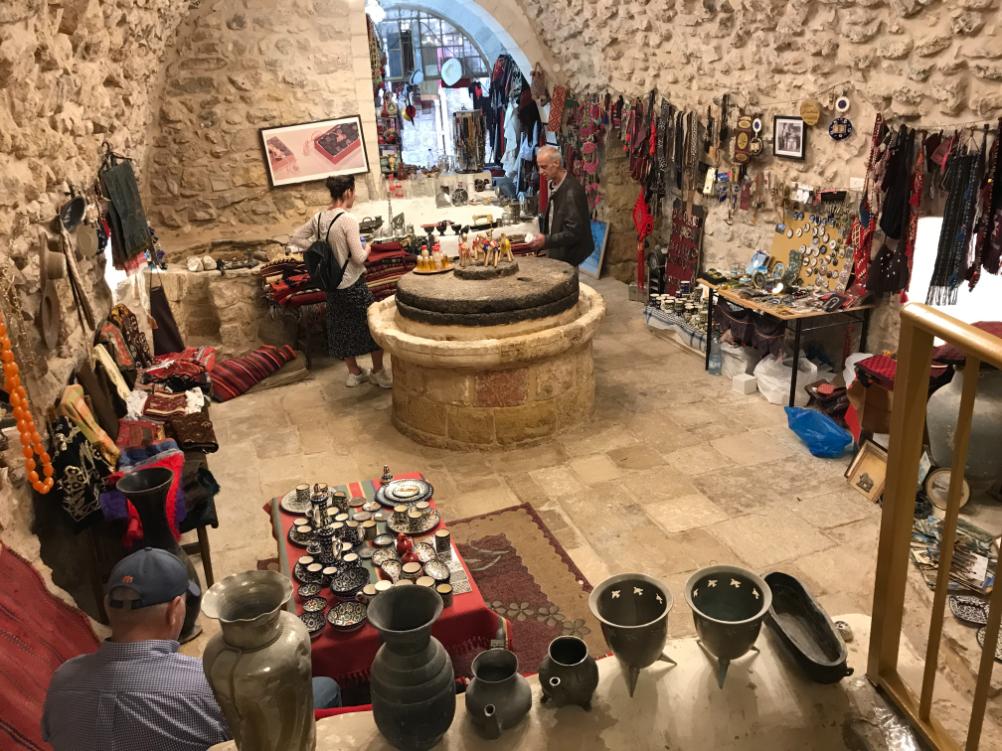
“Of course the Israelis want us to leave. They are doing everything possible to make our lives miserable in hopes that we will give up and move away. They want to make life unbearable for us here, but we are determined to stay strong. We will never leave. This place has been with my family for over four-generations, it is my home, my life. I will never leave.”
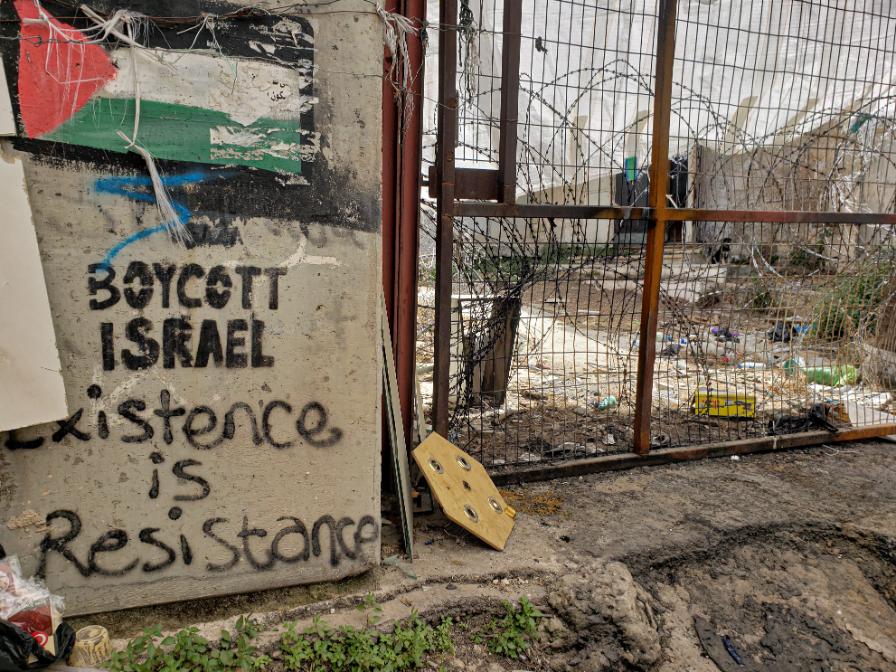
His words ripple through my thoughts as we make our way back to the car and pass a crudely graffitied wall of rubble, “Existence is Resistance.”
Mohammad has a friend with a restaurant in the new city and we enter to discover a hive of activity. The tables are empty, but the kitchen is bustling and at the main counter a handful of men are packing boxes and bags of freshly made food before handing them over to a ceaseless stream of coming and going drivers, who’s cars and mopeds are left idling on the streetside. Although the restaurant is officially closed due to the holiday, the owner graciously makes us a table and asks us to stay for lunch. Within minutes our table is covered with dishes–stacks of fresh warm pitas, a massive bowl of hummus, grilled eggplants and capsicums, grated salad, a few different dips, and a pile of falafels. We all duck and dive, assembling plates with our favorite tastes, and then fall quiet as we relish the delicious cuisine.
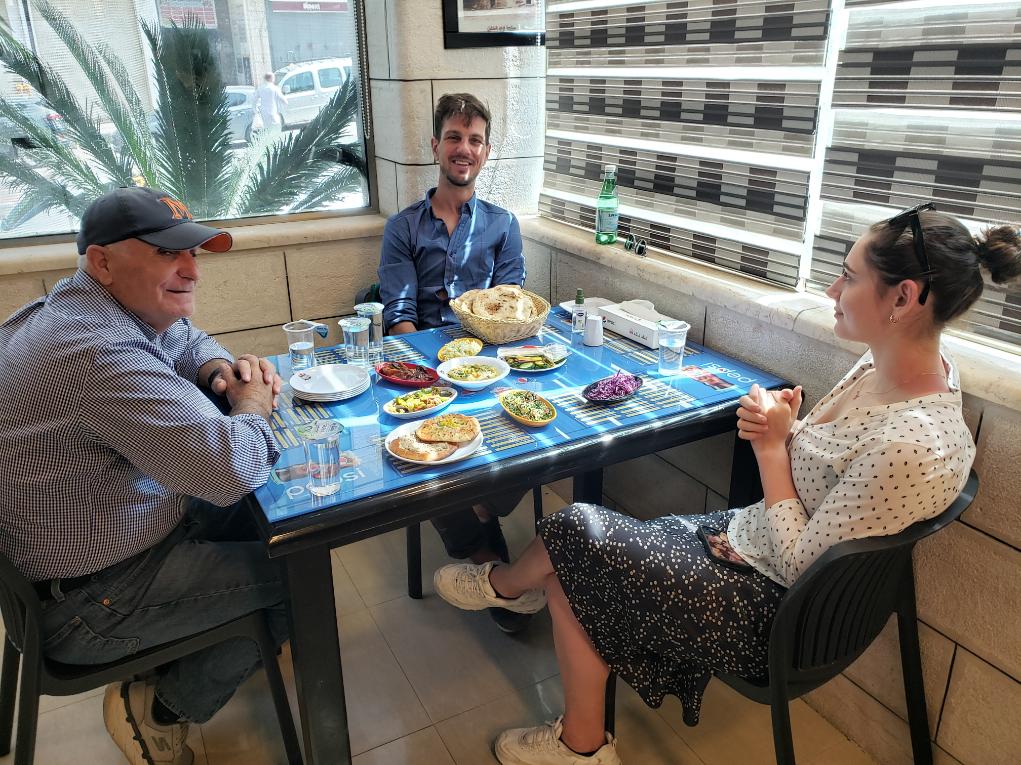
“I’m grateful you all came on this tour,” Mohammad says after some small talk during the meal. “Obviously I’m glad to have this job, but more importantly I’m honored that you are taking the time to learn a bit about the Palestinian perspective, and trying to see things the way we do. In truth, we need your help.
“It is very difficult for us because any criticism of Israel–no matter how well evidenced, documented, and legitimate–is simply labeled as ‘anti-semitic’ and effectively dismissed, not only by the Israeli population at large but also by Western media outlets. In this way, it is virtually impossible for our long-standing and legitimate grievances to be taken seriously.
“No matter the drastic measures taken to bring awareness to our plight, the big players in international politics continue to stand by Israel, regardless of their crimes, and we are cast as terrorist enemies in the eyes of the West.
“Palestinians are not blameless, some of ours have done unfortunate acts, but you must know that we are a people pushed into a corner, with no viable options for participating in the improvement of our own futures. Our land is being stolen; our freedom of movement is severely restricted; our young men are frequently the victims of erroneous military tribunals; our cities are bombed; and we are not even allowed access to basic necessities–like water and electricity–without paying and playing by Israeli rules…rules and laws that we have absolutely no ability to affect or influence.”


There’s a long silence at our table, and by this point everyone has given up eating. Finally, I break the silence, “What do you see as the path forward? Or rather, as a Palestinian living in Israel, what is your most pressing demand?”
“Citizenship,” Mohammad emphatically responds without hesitation. He pauses for a moment to let that land and then continues, “But not the red-tape and restricted ‘citizenship’ that some Palestinians have now, I want the guaranteed full-rights of authentic citizenship, just as Jewish Israelis have. Give me that, and I will proudly call myself Israeli.”
Again we fall silent and Mohammad notices our surprise, “You thought I would say I want an independent state of Palestine, didn’t you?”
“Yes,” Becca speaks for the group, “Western media makes it sound like a two-state solution is the only solution.”
“Of course,” Mohammad sighs with exasperation, “this is more smoke and mirrors, just a diversion used by Israel and her allies to stall any real and meaningful discussion, and thereby maintain the status quo. We came close to a two-state solution, but that dream died with Yitzhak Rabin back in 1995. No sensible or pragmatic Palestinian politician is demanding a two-state solution any more, nor even has been for over a decade. Much better to accept reality as it is and work towards goals which are actually achievable, and citizenship for Palestinians is not only possible, it is morally imperative.”
“Would your family and friends agree with you?” I press on.
“Absolutely,” he responds once again without hesitation. “Of course there are factions that want more, or others that will never accept the state of Israel–such ideas can never be exterminated. But I am confident that the vast majority of Palestinians would be willing to accept the authority of the state if we are allowed to be full and legitimate members of it. Who wants to be a second-class citizen, a ‘permanent resident’ of lands that their families have owned for generations, for far longer than the state of Israel has even existed…who, I ask?”


It has never occurred to me that these warring factions might actually be better off cohabiting in a single country–if you can’t beat em, join em–but the idea begins to make sense. The issue of disputed borders will largely disappear, the subjection of Palestinian civilians to Israeli military law will be muted, and the necessity for both sides to find common ground will become acute. Will things still be terse and contentious? Of course, but the antidote is found within the poison. This desperate push to keep things separate and segregated only breeds further injustice, fear, and anger. History has proven this point time and again. Unification may be slow and difficult, but giving participatory rights to hopeless people is the best way to incentivize cooperation and mitigate extremist behavior. The cost of human dignity is relatively cheap, but the rewards are immeasurable.
“If you had your way,” Clare asks Mohammad in the car on our way back to Jerusalem, “and could move about as a free citizen…what would you most like to do?”
Mohammad thinks for a moment before answering. “Well, for as long as I can remember, my dream has been to organize a tour that includes a meal in each of our region’s major cities. Leaving early from Jerusalem we would drive to Beirut for breakfast, then onto Damascus for lunch, then to Amman for dinner, and finally cross the Jordan river and return home to Jerusalem for desert. It would be a long day of driving, but it can be done…if only the borders were open and the region at peace.”
There is no denying the marvel of modern Israel. An enduring people that have been without a homeland for 2000 years, and in that time have preserved their unique culture and faith while persevering unspeakable persecution in every corner of the globe. A people that survived one of history’s greatest crimes against humanity, and then within a few decades of being given a slice of land to call home have turned that territory into a thriving, robust, and prosperous country. It’s nothing short of a miracle, and the Jewish people deserve to relish their fortitude, tenacity, ingenuity, and celebrate their accomplishments.
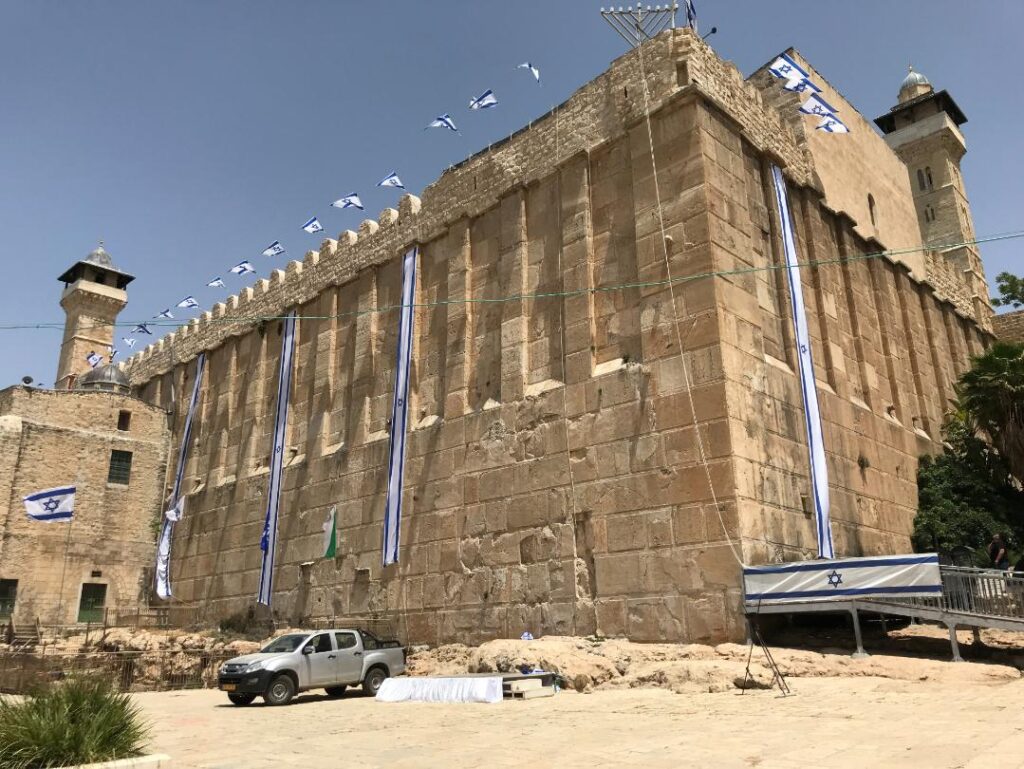
And yet it’s impossible to overstate the severity, complexity, and intractable dilemma that is the state of Israel and the territories it occupies. It is one of the world’s longest-standing uncrackable nuts, and the focal point of so many present day Middle Eastern tensions. As an American, I understand full-well that you can love your country while despising its policies, and I know I’m not alone. Despite the havoc it has wreaked, I think the creation of modern Israel nevertheless remains a resounding testament not only to the potential of global cooperation that willed it into existence, but also to the unflappable grit and inventive enterprise of the Jewish people, and I for one am grateful that it exists…but I’m not blind.
To quote a famous American who was also no stranger to hardship, “Injustice anywhere is a threat to justice everywhere.” If the capacity for surviving injustice is inversely proportional to the capacity for thriving justly, then I remain abundantly hopeful for the people of Israel and Palestine.